
FREE TRADE AGREEMENT
1. Context
2. About the Free Trade Agreement
- A Free Trade Agreement (FTA) is an agreement between two or more countries to reduce or eliminate barriers to trade, such as tariffs, quotas, and subsidies.
- FTAs can also include provisions on other issues, such as investment, intellectual property, and labour standards.
- The goal of an FTA is to promote trade and economic growth between the signatory countries.
- By reducing or eliminating trade barriers, FTAs can make it easier for businesses to export their goods and services to other countries, which can lead to increased production, employment, and innovation.
3. Types of Free Trade Agreement
- Bilateral Free Trade Agreement (BFTA) involves two countries, aiming to promote trade and eliminate tariffs on goods and services between them. It establishes a direct trade relationship, allowing for a more focused and tailored agreement between the two nations.
- Multilateral Free Trade Agreement (MFTA) Involving three or more countries, an MFTA seeks to create a comprehensive trade bloc, promoting economic integration on a larger scale. It requires coordination among multiple parties, addressing diverse economic interests and fostering a broader regional economic landscape.
- Regional Free Trade Agreement (RFTA) involves countries within a specific geographic region, aiming to enhance economic cooperation and integration within that particular area. It focuses on addressing regional economic challenges and fostering collaboration among neighbouring nations.
- Preferential Trade Agreement (PTA) involves a reciprocal reduction of tariffs and trade barriers between participating countries, granting preferential treatment to each other's goods and services. It allows countries to enjoy trading advantages with specific partners while maintaining autonomy in their trade policies with non-participating nations.
- Comprehensive Economic Partnership Agreement (CEPA) is a broad and advanced form of FTA that goes beyond traditional trade barriers, encompassing various economic aspects such as investment, intellectual property, and services. It aims for a more comprehensive economic partnership, encouraging deeper integration and collaboration between participating countries.
- Customs Union While not strictly an FTA, a Customs Union involves the elimination of tariffs among member countries and the establishment of a common external tariff against non-member nations. It goes beyond standard FTAs by harmonizing external trade policies, creating a unified approach to trade with the rest of the world.
- Free Trade Area (FTA) with Trade in Goods (TIG) and Trade in Services (TIS): Some FTAs specifically emphasize either trade in goods or trade in services, tailoring the agreement to the specific economic strengths and priorities of the participating countries. This approach allows nations to focus on areas where they have a comparative advantage, fostering specialization and efficiency.
4. India's Free Trade Agreements
India is a member of several free trade agreements (FTAs) and is currently negotiating others. India's FTAs have helped to reduce trade barriers and promote trade and economic growth. They have also helped to attract foreign investment and create jobs.
- The South Asian Free Trade Agreement (SAFTA) was signed in 1995 by the seven countries of the South Asian Association for Regional Cooperation (SAARC). SAFTA aims to reduce or eliminate tariffs on trade between the member countries.
- The India-Bangladesh FTA was signed in 2010 and came into force in 2011. It is a comprehensive FTA that covers goods, services, and investments.
- The India-Sri Lanka FTA was signed in 1999 and came into force in 2000. It is a comprehensive FTA that covers goods, services, and investments.
- The India-ASEAN Free Trade Agreement was signed in 2002 and came into force in 2010. It is a comprehensive FTA that covers goods, services, and investments.
- The India-Korea Comprehensive Economic Partnership Agreement (CEPA) was signed in 2010 and came into force in 2011. It is a comprehensive FTA that covers goods, services, and investments.
- The India-Japan Comprehensive Economic Partnership Agreement(CEPA) was signed in 2022 and came into effect in 2023. It is a comprehensive FTA that covers goods, services, and investments.
- The India-UAE Comprehensive Partnership Agreement (CEPA) was signed in 2022 and came into effect in 2022. It is a comprehensive FTA that covers goods, services, and investments.
- The India-Australia Economic Cooperation and Trade Agreement (ECTA) was signed in 2022 and came into effect in 2022. It is a comprehensive FTA that covers goods, services, and investments.
- The India-Malaysia Comprehensive Economic Cooperation Agreement (CECA) was signed in 2010 and aims to enhance economic ties by addressing trade in goods and services, as well as investment and other areas of economic cooperation.
- The India-Thailand Free Trade Agreement was signed in 2003 and focuses on reducing tariffs and promoting trade in goods and services between India and Thailand.
- The India-Singapore Comprehensive Economic Cooperation Agreement (CECA) has been operational since 2005, this agreement covers trade in goods and services, as well as investment and intellectual property.
- The India-Nepal Trade Treaty While not a comprehensive FTA, India and Nepal have a trade treaty that facilitates the exchange of goods between the two countries.
- The India-Chile Preferential Trade Agreement was signed in 2006 and aims to enhance economic cooperation and reduce tariffs on certain products traded between India and Chile.
5. India - UK Free Trade Agreement
5.1. Background
- Both countries have agreed to avoid sensitive issues in the negotiations.
- The interim (early harvest agreement) aims to achieve up to 65 per cent coverage for goods and up to 40 per cent coverage for services.
- By the time the final agreement is inked, the coverage for goods is expected to go up to "90 plus a percentage" of goods.
- India is also negotiating a similar early harvest agreement with Australia, which is supposed to set the stage for a long-pending Comprehensive Economic Cooperation Agreement that both countries have been pursuing for nearly a decade.
- While the commencement of negotiations does mark a step forward in the otherwise rigid stance adopted and when it comes to trade liberalisation, experts point to impediments and the potential for legal challenges going ahead.
5.2. GATT (General Agreement on Trade and Tariffs)
- The exception to the rule is full-scale FTAs, subject to some conditions.
- One rider, incorporated in Article XXIV.8 (b) of GATT, stipulates that a deal should aim to eliminate customs duties and other trade barriers on "Substantially all the trade" between the WTO member countries that are signatories to an FTA.
- For this Agreement, a free-trade area shall be understood to mean a group of two or more customs territories in which the duties and other restrictive regulations of commerce are eliminated on substantially all the trade between the constituent territories in products originating in such territories.
- It is often beneficial to negotiate the entire deal together, as an early harvest deal may reduce the incentive for one side to work towards a full FTA.
- These agreements are not just about goods and services but also issues like investment.
- If you are trying to weigh the costs and benefits, it is always better to have the larger picture in front of you.
- In the case of the early harvest agreement inked with Thailand, automobile industry associations had complained that relaxations extended to Bangkok in the early harvest had reduced the incentive for Thailand to work towards a full FTA.
- Early harvest agreements may serve the function of keeping trading partners interested as they promise some benefits without long delays, as India becomes known for long-drawn negotiations for FTAs.
- Government emphasis on interim agreements may be tactical so that a deal may be achieved with minimum commitments and would allow for contentious issues to be resolved later.
|
For Prelims: Free Trade Agreement, India-U.K, Bilateral Free Trade Agreement, G-20 Summit, Agenda 2030, Covid-19 Pandemic, SAARC, General Agreement on Trade and Tariffs, Comprehensive Economic Partnership Agreement, Multilateral Free Trade Agreement, Regional Free Trade Agreement, Preferential Trade Agreement, Customs Union,
For Mains:
1. Evaluate the potential impact of the India-UK FTA on the Indian economy, considering both positive and negative aspects (250 Words)
2. Critically evaluate the significance of Free Trade Agreements (FTAs) in promoting trade and economic growth, considering their potential benefits and drawbacks. (250 Words)
|
|
Previous Year Questions
1. Consider the following countries:
1. Australia
2. Canada
3. China
4. India
5. Japan
6. USA
Which of the above are among the free-trade partners' of ASEAN? (UPSC 2018)
A. 1, 2, 4 and 5 B. 3, 4, 5 and 6 C. 1, 3, 4 and 5 D. 2, 3, 4 and 6
Answer: C
2. Increase in absolute and per capita real GNP do not connote a higher level of economic development, if (UPSC 2018) (a) Industrial output fails to keep pace with agricultural output. Answer: C 3. The SEZ Act, 2005 which came into effect in February 2006 has certain objectives. In this context, consider the following: (2010)
Which of the above are the objectives of this Act? (a) 1 and 2 only (b) 3 only (c) 2 and 3 only (d) 1, 2 and 3 Answer: A 4. A “closed economy” is an economy in which (UPSC 2011) (a) the money supply is fully controlled Answer: D 5. With reference to the “G20 Common Framework”, consider the following statements: (UPSC 2022)
1. It is an initiative endorsed by the G20 together with the Paris Club. 2. It is an initiative to support Low Income Countries with unsustainable debt. Which of the statements given above is/are correct? (a) 1 only (b) 2 only (c) Both 1 and 2 (d) Neither 1 nor 2 Answer: C
|
UNIFORM CIVIL CODE (UCC)
- Underlining that the Uniform Civil Code is “neither necessary nor desirable at this stage”, the 21st Law Commission of India, in 2018, argued for reform of family laws of every religion through amendments and codification of certain aspects so as to make them gender-just
- In its ‘Consultation Paper on Family Law Reforms’, the Law Commission took a stand in favour of “equality ‘within communities’ between men and women” (personal law reform), “rather than ‘equality between’ communities” (UCC)
- According to the 22nd Law Commission Cultural diversity cannot be compromised to the extent that our urge for uniformity itself becomes a reason for threat to the territorial integrity of the nation
- women must be guaranteed their freedom of faith without any compromise on their right to equality
- A UCC would provide for one law for the entire country, applicable to all religious communities, in their personal matters such as marriage, divorce, inheritance, adoption etc
- Currently, Indian personal law is fairly complex, with each religion adhering to its own specific laws
- Separate laws govern Hindus including Sikhs, Jains and Buddhist, Muslims, Christians, and followers of other religions
- Moreover, there is diversity even within communities. All Hindus of the country are not governed by one law, nor are all Muslims or all Christians
- For instance, in the Northeast, there are more than 200 tribes with their own varied customary laws
- The Constitution itself protects local customs in Nagaland. Similar protections are enjoyed by Meghalaya and Mizoram. Even reformed Hindu law, in spite of codification, protects customary practices
- The exception to this rule is the state of Goa, where all religions have a common law regarding marriages, divorces, and adoption
- Article 44 of the Constitution lays down that the state shall endeavour to secure a UCC for citizens throughout the territory of India
- Article 44 is among the Directive Principles of State Policy. Directive Principles are not enforceable by court, but are supposed to inform and guide governance
- However, in some senses, Article 44 is unique in this manner. While Article 44 uses the words “state shall endeavour”, other Articles in the ‘Directive Principles’ chapter use words such as “in particular strive”; “shall in particular direct its policy”; “shall be obligation of the state
- The phrase “by suitable legislation” is absent in Article 44. All this implies that the duty of the state is greater in other directive principles than in Article 44
|
For Prelims: Unifrom Civil Code (UCC), DPSP, Fundamental rights, Law Commission
For Mains: 1. What is the Uniform Civil Code? What are the challenges in implementing a Uniform Civil Code in a diverse country like India?
|
|
Previous Year Questions
Q1. Consider the following provisions under the Directive Principles of State Policy as enshrined in the Constitution of India: (2012)
Which of the above are the Gandhian Principles that are reflected in the Directive Principles of State Policy? (a) 1, 2 and 4 only Answer (b) 2. A legislation that confers on the executive or administrative authority an unguided and uncontrolled discretionary power in the matter of the application of law violates which one of the following Articles of the Constitution of India? Answer (a) Mains 1.Discuss the possible factors that inhibit India from enacting for its citizens a uniform civil code as provided for in the Directive Principles of State Policy. (2015) |
GEOGRAPHICAL INDICATION TAG
1. Context
2. About Geographical Indication (GI) Tag
- A Geographical Indication (GI) is a label that is applied to products that have a specific geographical origin and that have characteristics related to that particular location.
- For Example, a GI tag for Amroha Dholak indicates that the dholaks must be made in Amroha, Uttar Pradesh, using traditional methods and materials.
3. Importance of GI Tag
- GI tags are important because they help to produce the reputation and authenticity of products from a particular region.
- They also help to promote fair trade and sustainable practices. In the case of the seven products from Uttar Pradesh that have received GI tags, these tags will help to ensure that these products are made using traditional methods and that they are of high quality.
- This will benefit the artisans who make these products and it will also help to preserve the unique cultural heritage of Uttar Pradesh.
4. Products from Uttar Pradesh Get GI Tag
4.1. Amroha Dholak
- It is a musical instrument crafted from natural wood, particularly mango, jackfruit and teakwood.
- Skilled artisans carve hollow blocks of various sizes and shapes from mango and sheesham trees, which are then fitted with animal skin, typically goatskin, to produce the instrument.
- It is produced by around 300 small units, employing over 1, 000 artisans. The Artisans Welfare Society in Mohalla Danishmandan, Amroha, Uttar Pradesh applied the GI Tag.
 Image source: One district-one product
4.2. Baghpat Home Furnishings
- Exquisite Handloom Craft The Directorate of Handloom and Textile Industries, Government of Uttar Pradesh and the Master Weavers Cooperative Society Limited applied the Baghpat Home Furnishings.
- Baghpat and Meerut are renowned for their exclusive handloom home furnishing products and the tradition of weaving cotton yarn fabrics for generations.
- The handloom weaving process in Baghpat is known for utilizing only cotton yarn and the distinctive frame loom technique.
 Image source: One district-one product
4.3. Barabanki Handloom Product
- A GI Tag for Traditional Weaving The Barabanki Handloom Product has also been honoured with a GI tag.
- The application for this product was filed by the Directorate of Handloom and Textile Industries, Government of Uttar Pradesh, along with Bhartiya Bunkar Sahkari Samiti Limited.
- The filing reveals that the Barabanki cluster comprises approximately 50, 000 weavers and 20, 000 looms in Barabanki and its adjoining areas.
- The annual turnover of this cluster is projected to be around ₹150 crores.
 Image source: One district-one product
4.4. Kalpi Handmade Paper
- An Age-old Craft application for the Kalpi Handmade Paper was submitted by the Hasht Nirmit Kagaj Samiti in the Industrial Estate of Kalpi, Uttar Pradesh.
- Kalpi has a rich history of handmade paper manufacturing. Munnalal Khaddari a Gandhian formally introduced the craft in the 1940s, although some locals claim its roots go even further back.
- The Kalpi handmade paper-making cluster engages over 5, 000 craftsmen and operates approximately 200 units.
 Image Source: Magzter
4.5. Mahoba Gaura Patthar Hastashlip
- Crafted from the Pyro Flight Stone Mahoba Gaura Pattar Hastashlip represents the stone craft of the region, specifically using the unique and delicate Pyro Flight Stone.
- This radiant white stone is predominantly found in Mahoba and is carved into various pieces to create stunning craft items.
 Image Source: Jagran
4.6. Manipuri Tarkashi
- Intricate Brass Wire Inlay Work on Wood Mainpuri Tarkashi is a popular art form originating from Mainpuri, Uttar Pradesh.
- It involves intricate brass wire inlay work on wood. Traditionally, it was employed in the creation of Khadaous (wooden sandals) an essential household item when leather was considered unclean.

4.7. Sambhal Horn Craft
- Unique Handcrafted Art The Sambhal Horn Craft utilizes raw materials obtained from dead animals and showcases the skilful handiwork of artisans.
- This craft involves completely handmade creations and is recognized for its distinctiveness.

Image source: One district-one product
It is embroidered on an off-white coarse cloth with red, yellow and green coloured threads, with each colour holding significance. Green symbolises the mountains and hills, and yellow stands for peace and happiness. Red stands as the symbol of blood.

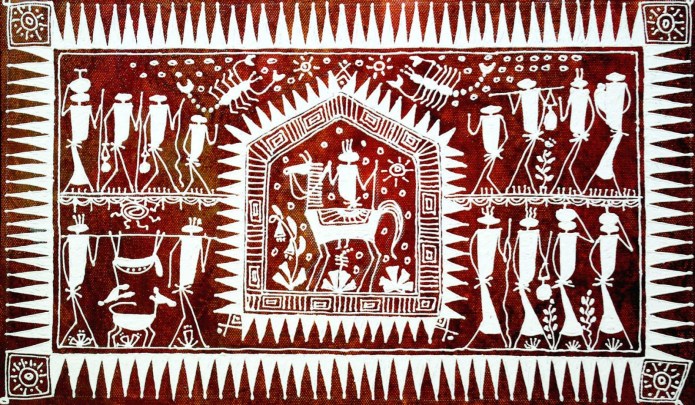
The art form belongs to the Lanjia Saura community, a PVTG largely residing in the Rayagada district. These paintings are in the form of exterior murals painted on the mud walls of homes. White paintings figure over a crimson-maroon background.
It is believed that the Lanjia Sauras paint their walls with Idital artworks to show gratitude to their deities and forefathers, and also for the well-being of their community. Reflecting the love and affection of the primitive tribes for nature, they feature subjects like tribal humans, trees, animals, birds, the Sun and the Moon.
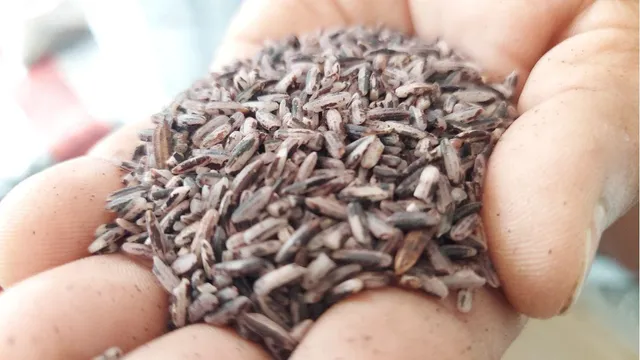
4.10. Koraput Kala Jeera Rice
Nayagarh Kanteimundi Brinjal is known for its prickly thorns on the stems and the whole plant. The green and round fruits contain more seeds as compared to other genotypes. It is famous for its unique taste and relatively short quick cooking time. The plants are resistant to major insects and can be grown with minimal pesticide.
It is being widely cultivated in Nayagarh district of the state. The growers are getting a yield of up to 200 quintals per hectare and selling at around Rs 60 per kg. Historical records also suggest that the locals got the brinjal from the hilly areas. They collected seeds from it and started raising seedlings nearly 100 years ago
4.13.Odisha Khajuri Guda
Odisha’s “Khajuri Guda” or jaggery is a natural sweetener extracted from date palm trees and has its origin in the Gajapati district. Traditionally, the jaggery is prepared in a trapezoidal form called ‘Patali Gur’ and is organic by nature. It is dark brown and has a unique taste

4.14.Dhenkanal Magji
Dhenkanal Magji is a type of sweet made from cheese from buffalo milk, with distinct characteristics in terms of appearance, taste, flavour, shape, and size. It also has unique nutritional values that distinguish it from other cheese-based sweets.
Thousands of people were said to be earning their livelihood through animal husbandry, especially buffalo rearing, during the British era. The region was the hinterland of buffalo milk production and cheese was the third largest produce, after milk and curd. Mandar-Sadangi area of Gondia block is believed to be the centre of origin of the sweet stuff, which has now been spread to the entire district.
The sweet is prepared by draining moisture from the cheese and then frying it, finally forming balls from the mixture

5. Way forward
A marker of authentic products, the GI tags also help protect the interests of the local growers and artisans by preventing duplicity of the products and sale from unauthorised traders. Consumers, through the tags, can know which goods are certified
|
For Prelims: Geographical Indication Tag, Uttar Pradesh, Amroha Dholak, Mahoba Gaura Patthar Hastashlip, Manipuri Tarkashi, Sambhal Horn Craft, Baghpat Home Furnishings, Barabanki Handloom Product, Kalpi Handmade Paper,
For Mains:
1. Discuss the potential economic and cultural benefits of obtaining GI tags for regional products in terms of enhancing their market value and preserving traditional knowledge. (250 Words)
|
|
Previous Year Questions 1. Which of the following has/have been accorded 'Geographical Indication' status? (UPSC 2015) 1. Banaras Brocades and Sarees
2. Rajasthani Daal-Bati-Churma
3. Tirupathi Laddu
Select the correct answer using the code given below.
A. 1 only B. 2 and 3 only C. 1 and 3 only D. 1, 2 and 3 Answer: C
2. India enacted The Geographical Indications of Goods (Registration and Protection) Act, 1999 in order to comply with the obligations to (UPSC 2018)
A. ILO B. IMF C. UNCTAD D. WTO
Answer: D
3. On the basis of 'one district one product' programme in Uttar Pradesh, which one of the following pairs is NOT correctly matched? (UPPSC Combined State Exam 2022)
A. Gautam Buddh Nagar - Readymade Garments
B. Amethi - Moonz Products
C. Agra - Leather Products
D. Baghpat - Wooden Toys
Answer: D
4. In which of the following states was the Monpa handmade paper making unit inaugurated in December 2020? (SSC CHSL 2021)
A. Manipur B. Tripura C. Assam D. Arunachal Pradesh
Answer: D
|
BRICS SCIENTIFIC COLLABORATION
BRICS functions as a collaborative force aimed at establishing a multipolar world system. Cooperation in science, technology and innovation has been a key agenda for the grouping and has expanded over the years to include socially relevant areas such as energy, water, health and the environment
2. About BRICS
- The BRICS bloc—consisting of Brazil, Russia, India, China, and South Africa—represents a major global coalition, distinguished by its significant share in world GDP, strong scientific and technological capabilities, abundant natural resources, and large population base.
- Over time, it has emerged as an influential platform on the global stage, articulating the perspectives of nations that aim to counterbalance Western dominance. The grouping works collectively toward promoting a multipolar international order.
- While its role in global financial and macroeconomic discussions is well acknowledged, its collaboration in science, technology, and innovation (STI) has received comparatively limited attention.
- In an era where international scientific partnerships are increasingly shaped by geopolitical rivalries, techno-nationalism, and strategic restrictions such as sanctions and export controls, BRICS plays an important role in shaping the global STI ecosystem.
- The platform enables member countries to align their approaches, strengthen their collective bargaining power in global economic governance, and shape development financing through mechanisms such as the New Development Bank.
- BRICS nations also hold considerable importance in global trade, energy supply, and the provision of critical natural resources. The introduction of BRICS+ in 2022 marked a shift toward greater inclusivity, aiming to enhance cooperation among countries of the Global South and reduce reliance on external technological systems.
- This initiative reflects a growing effort to build shared capabilities through structured programmes. The grouping has further expanded to include countries such as Saudi Arabia, Egypt, the UAE, Ethiopia, Indonesia, and Iran
- Science, technology, and innovation (STI) cooperation has been embedded in the BRICS agenda since its inception. It gained formal recognition in 2011 and was later strengthened through engagements among senior officials and BRICS Ministers responsible for STI.
- A landmark memorandum of understanding in 2015 elevated STI to a central strategic priority, establishing an institutional structure and operational direction for joint research and capacity-building.
- This framework has since broadened collaboration, enabling member states to utilise their complementary strengths to tackle common developmental issues and push the boundaries of advanced research.
- The first BRICS Action Plan for Innovation Cooperation (2017–2020) assigned the Science, Technology, Innovation, and Entrepreneurship Partnership (STIEP) Working Group the responsibility of executing multiple initiatives.
- These efforts promoted entrepreneurship ecosystems, encouraged participation of youth and women in STI, and supported technology transfer along with business incubation.
- Over time, the grouping has shifted its focus from basic scientific collaboration toward innovation-driven initiatives and practical technology transfer.
- These evolving priorities are reflected in annual ministerial declarations, where BRICS Ministers of Science, Technology, and Innovation convene to endorse strategic directions.
- Within each country, designated nodal agencies manage coordination, invite research proposals, and compile project pipelines during their presidency.
- For instance, during India’s leadership, institutions such as the Council of Scientific and Industrial Research (CSIR) and the Department of Biotechnology (DBT) play a central coordinating role.
- Recent initiatives highlight a strong push toward innovation-led and technology-enabled ecosystems.
- Platforms like iBRICS and the BRICS Technology Transfer Centre (TTC) illustrate this direction, with the TTC contributing to policy development and institutional connectivity for cross-border technology commercialisation.
- However, despite these advances, large-scale commercial deployment of such technologies remains limited.
- The scope of joint research has also evolved, moving beyond foundational science to address socially relevant sectors such as energy, water, healthcare, and environmental sustainability.
- The COVID-19 pandemic accelerated this transition, bringing heightened attention to public health systems, vaccine development, biosecurity, and digital healthcare.
- More recent collaborations have incorporated areas such as high-performance computing (HPC), advanced materials, information and communication technologies (ICT), and space applications, alongside a growing emphasis on artificial intelligence and data-driven science.
- Although working groups align with shared developmental priorities, progress has been uneven across sectors.
- Notable advancements are visible in ICT and HPC, including initiatives like the BRICS Institute of Future Networks, as well as in space collaboration following a 2021 intergovernmental agreement.
- In contrast, domains requiring extensive infrastructure or long-term investment—such as mega-science projects and ocean or polar research—have progressed more slowly.
- The expansion of BRICS has further strengthened its role as an inclusive platform for knowledge sharing and collaborative innovation.
- The 2025 Declaration on Artificial Intelligence marked a significant shift by elevating AI to a core pillar of multilateral governance, emphasising principles of inclusivity, equity, and development orientation.
- While the 2021–2024 Action Plan concentrated on building networks and thematic cooperation, subsequent strategies aim to scale up projects with greater real-world impact, particularly in biotechnology, climate technologies, industrial innovation, and AI.
- With India set to assume the 2026 Presidency under the theme “Building for Resilience, Innovation, Cooperation and Sustainability,” BRICS is poised to deepen scientific collaboration.
- The focus will be on leveraging its expanded membership to enhance collective capacities and address pressing challenges such as the digital divide, public health emergencies, and climate resilience.
- However, engagement from newer members has been uneven; among the latest entrants, only Egypt and Iran participated in the most recent call for proposals.
- Additionally, the China-BRICS Research Centre on New Quality Productive Forces, recently established in Beijing, is expected to serve as a key platform for academic exchange and technological collaboration
4. Concerns and Consequences
- When compared with countries such as South Korea, the National Innovation Systems (NIS) of BRICS nations reveal a mixed picture of capabilities and gaps.
- In particular, gross domestic expenditure on research and development (GERD) remains relatively low across most members, with China being a notable exception.
- Studies indicate a substantial gap between BRICS countries and South Korea across multiple innovation metrics, with all members except China needing significant progress.
- With the transition to BRICS+, it becomes equally important to evaluate and strengthen the innovation ecosystems of the newly inducted members. Enhancing these systems could become a key priority over the coming decade, with the possibility of extending such improvements across the wider Global South.
- As highlighted by Stanford University scholar Irina Dezhina, the diversity among new members—both in terms of economic advancement and scientific capabilities—poses challenges in aligning priorities.
- This diversity may require BRICS+ to promote targeted bilateral or “paired” collaborations between specific countries.
- Lessons can also be drawn from the European Union (EU), which offers a broad range of STI programmes, whereas BRICS currently provides relatively limited opportunities.
- Moreover, although competition for available funding is high, the overall pool of resources remains constrained.
- Scholars argue that BRICS initiatives must evolve qualitatively to effectively address complex global challenges.
- At present, however, systematic research on STI cooperation within BRICS is limited, and there is no structured mechanism for continuous assessment and evidence-based policy inputs for member states
Despite notable progress in collaboration, concerns remain about whether the existing institutional arrangements are adequate for future demands. A major limitation is the absence of a permanent institutional framework to oversee STI cooperation. The current model—where leadership rotates annually with the presidency—is not well-suited for long-term planning. One possible solution is to adopt a model similar to the EU’s Horizon Programme by creating a centralised Secretariat responsible for managing funds, issuing research calls, tracking implementation, and evaluating outcomes.
Additionally, launching a few long-term mega-science projects could significantly deepen cooperation among members. Over time, the scope of STI collaboration should extend beyond project funding to include research on governance frameworks and the broader societal and economic implications of emerging technologies within BRICS+. Such efforts would improve coordination in international negotiations and strengthen institutional capacity for STI governance.
In conclusion, although BRICS has made considerable strides in STI cooperation since 2015 despite various constraints, substantial improvements are still needed. Strengthening the framework to make it more responsive, efficient, and credible will enhance the group’s global standing. As the incoming chair of BRICS+ in 2026, India is well-positioned to steer this transformation
|
For Prelims: BRICS, Global South Unity, Western Influence, New Development Bank (NDB), and Contingent Reserve Arrangement (CRA).
For Mains: 1. Discuss the Implications of BRICS' Expansion for India's Geopolitical Positioning and Influence within the Alliance.
2. Analyze India's Role in Shaping BRICS' Membership Criteria and Its Strategic Significance in the Expanded Coalition.
|
Previous year Questions1. With reference to a grouping of countries known as BRICS, consider the following statements: (UPSC 2014)
1. The First Summit of BRICS was held in Rio de Janeiro in 2009.
2. South Africa was the last to join the BRICS grouping.
Which of the statements given above is/are correct?
A. 1 only
B. 2 only
C. Both 1 and 2
D. Neither 1 nor 2
Answer: B
2. With reference to BRIC countries, consider the following statements: (UPSC 2010)
1. At present, China's GDP is more than the combined GDP of all three other countries.
2. China's population is more than the combined population of any two other countries.
Which of the statements given above is/are correct?
A. 1 only
B. 2 only
C. Both 1 and 2
D. Neither 1 nor 2
Answer: A
3. The 'Fortaleza Declaration', recently in the news, is related to the affairs of (UPSC 2015)
A. ASEAN
B. BRICS
C. OECD
D. WTO
Answer: B
|
ARAVALLI RANGE
- Beyond being almost two billion years old and the oldest mountain system in India, these hills function as a vital ecological shield against the advance of desert conditions into the Indo-Gangetic plains.
- They act as a natural barrier slowing the eastward expansion of the Thar Desert into Haryana, Rajasthan, and western Uttar Pradesh. The range plays a crucial role in climate regulation, biodiversity conservation, and groundwater replenishment.
- Extending roughly 650 km from Delhi to Gujarat, it supports key water-recharge networks and gives rise to major rivers such as the Chambal, Sabarmati, and Luni.
- The region is abundant in building stones like sandstone, limestone, marble, and granite, as well as minerals including lead, zinc, copper, gold, and tungsten.
- Although these resources have been extracted for centuries, the last forty years have seen rampant stone and sand quarrying, leading to declining air quality and a sharp reduction in groundwater recharge.
- Part of this mining activity has occurred unlawfully. The Court also observed that India has international obligations under the United Nations Convention to Combat Desertification to safeguard fragile ecosystems like the Aravalli range

- The Aravalli Range is one of the oldest fold mountain systems in the world, with its geological origins dating back nearly two billion years to the Precambrian era.
- Unlike young fold mountains such as the Himalayas, the Aravallis have undergone extensive weathering and erosion over millions of years, which has reduced them to a series of low-lying hills, ridges, and rocky outcrops rather than sharp peaks.
- This long geological history makes the range a valuable record of early crustal evolution and ancient tectonic processes on the Indian subcontinent.
- Geologically, the Aravallis are composed primarily of metamorphic and igneous rocks, including quartzite, schist, gneiss, marble, and granite. These rock formations are part of the Aravalli–Delhi orogenic belt, which was formed due to ancient tectonic collisions and crustal movements.
- The presence of economically significant minerals such as copper, lead, zinc, gold, and tungsten reflects the complex geological processes that shaped the region. Over time, repeated uplift and denudation exposed these mineral-rich formations at the surface, making the range an important mining zone historically.
- Physically, the Aravalli Range stretches for about 650 kilometres in a south-west to north-east direction, beginning near Palanpur in Gujarat and extending through Rajasthan to Haryana and Delhi.
- The range is discontinuous in nature, with broken hill chains and isolated ridges rather than a continuous mountain wall. Its highest peak is Guru Shikhar in the Mount Abu region of Rajasthan, rising to about 1,722 metres above sea level.
- Moving northwards, the height of the range gradually declines, merging into low hills and rocky terrain around Delhi.
- The Aravallis play a significant role in shaping the physical geography of north-western India. Acting as a natural climatic divide, they influence rainfall patterns by intercepting south-west monsoon winds to a limited extent and preventing the unchecked eastward expansion of the Thar Desert.
- The range also forms an important watershed, giving rise to several seasonal and perennial rivers such as the Chambal, Sabarmati, Luni, and Banas.
- The fractured and porous nature of its rock formations allows rainwater to percolate underground, contributing substantially to groundwater recharge in an otherwise semi-arid region
- The “100-metre definition” of the Aravalli Hills refers to an administrative and legal criterion used—especially in environmental regulation and court proceedings—to identify and protect the Aravalli region.
- Under this definition, any area that rises more than 100 metres above the surrounding plain is treated as part of the Aravalli hill system, irrespective of whether it is a prominent mountain, ridge, or a low, eroded hill. In other words, even subtle elevations and fragmented hillocks that meet this height threshold are classified as Aravalli features.
- This definition became important because the Aravallis are very old and heavily eroded, meaning many sections no longer appear as classic mountains. If protection were limited only to visibly high or continuous hills, large portions of the range—especially in Haryana, Rajasthan, and the Delhi-NCR region—would fall outside legal safeguards.
- The Supreme Court and various environmental authorities have relied on the 100-metre criterion to prevent mining, construction, and land-use change in ecologically sensitive areas of the Aravalli range.
- By using a measurable elevation benchmark rather than appearance alone, the definition helps expand environmental protection to degraded and fragmented parts of the hills
- The Supreme Court’s intervention in the Aravalli region arose from growing concerns over rampant mining, construction, and land-use changes that were degrading this fragile and ancient mountain system.
- One of the core problems identified by the Court was the absence of a uniform and scientifically grounded definition of the Aravalli Hills.
- Different States and authorities were using varying criteria—based on revenue records, forest classification, or visual identification—allowing large tracts of the Aravallis to be excluded from protection and opened up for exploitation.
- To address this ambiguity, the Supreme Court emphasised the need for a uniform definition applicable across States, particularly Rajasthan, Haryana, and Delhi, where the Aravallis are most fragmented and vulnerable.
- The Court endorsed an objective, elevation-based approach, popularly referred to as the “100-metre definition”, under which land rising more than 100 metres above the surrounding plains would be treated as part of the Aravalli hill system.
- This was intended to ensure that even low, eroded, or discontinuous hill formations, which are characteristic of the Aravallis due to their great geological age, are brought within the protective framework.
- Through its interventions, the Supreme Court also linked the protection of the Aravallis to India’s international environmental obligations, particularly under the UN Convention to Combat Desertification (UNCCD).
- The Court observed that the degradation of the Aravalli range could accelerate desertification in north-western India and undermine groundwater recharge, air quality, and regional climate stability.
- Consequently, it directed governments to adopt a consistent and precautionary approach in identifying, mapping, and regulating activities in the Aravalli region
- Since the early 1990s, the Union Environment Ministry has framed regulations permitting mining only in projects that receive official approval, but these safeguards have been widely disregarded.
- In response to persistent violations, the Supreme Court intervened in 2009 and enforced a complete ban on mining activities in Haryana’s Faridabad, Gurugram, and Mewat districts.
- More recently, in May 2024, the Court halted the issuance and renewal of mining leases across the Aravalli range and instructed its Central Empowered Committee (CEC) to carry out an in-depth review. This exercise culminated in a set of recommendations submitted in March 2024.
- The CEC advocated a holistic strategy that called for scientifically mapping the entire Aravalli system across States, conducting a broad-scale environmental impact assessment of mining operations, and enforcing an absolute ban on mining in ecologically fragile zones.
- These included wildlife-protected areas, water bodies, tiger corridors, critical groundwater recharge regions, and locations within the National Capital Region.
- The Committee also stressed the need for tighter controls over stone-crushing units and advised that no fresh mining permissions or lease extensions be granted until comprehensive mapping and impact studies were completed.
- The Supreme Court incorporated these recommendations in its order issued in November 2025.
- In addition, in June 2025, the Union government launched the Aravalli ‘Green Wall’ initiative, aimed at increasing vegetation cover in a five-kilometre buffer zone around the range across 29 districts in Gujarat, Rajasthan, Haryana, and Delhi.
- According to the government, this programme is expected to make a significant contribution towards the restoration of 26 million hectares of degraded land by the year 2030.
The Court observed that earlier instances demonstrate how absolute prohibitions frequently give rise to illegal mining networks, aggressive sand mafias, and uncontrolled resource extraction. Consequently, instead of enforcing a complete shutdown, the Court adopted a balanced strategy—allowing lawful mining operations to proceed under strict oversight, placing a temporary halt on new mining activities until a science-based framework is developed, and keeping ecologically critical zones permanently closed to mining
|
For Prelims: Aravalli ranges, UN Convention to Combat Desertification (UNCCD)
For Mains: GS I - Indian Geography
|
NORTH ATLANTIC TREATY ORGANISATION (NATO)
- NATO, established on April 4, 1949, is a Western security alliance comprising 12 original members: Belgium, Canada, Denmark, France, Iceland, Italy, Luxembourg, the Netherlands, Norway, Portugal, the United Kingdom, and the United States.
- The alliance was formed by signing the Washington Treaty, deriving its authority from Article 51 of the United Nations Charter, which upholds the inherent right of independent states to individual or collective defense.
- Central to NATO is the principle of "collective security," where an attack on any member nation is viewed as an attack on all, necessitating collective response.
- This principle emerged from the Cold War context of the late 1940s, amid the rivalry between the USSR and the US over ideological and economic dominance.
- Article 5 of the Washington Treaty, addressing collective security, was introduced to counter the perceived threat of Soviet expansionism beyond Eastern Europe.
- In response, the USSR formed the Warsaw Pact in 1955, uniting socialist countries as allies.
- However, invoking Article 5 does not mandate uniform military action by all member states. The extent of intervention is determined by each country "as it deems necessary." To date, the only instance of Article 5 being activated was in response to the September 11, 2001 attacks on the US, leading to NATO's deployment in Afghanistan for nearly two decades
3. Who are NATO’s members today?
In addition to the initial 12 members, subsequent additions to NATO's membership include Greece and Turkey in 1952, West Germany in 1955 (later recognized as Germany), Spain in 1982, the Czech Republic, Hungary, and Poland in 1999, followed by Bulgaria, Estonia, Latvia, Lithuania, Romania, Slovakia, and Slovenia in 2004, Albania and Croatia in 2009, Montenegro in 2017, North Macedonia in 2020, Finland in 2023, and Sweden in 2024.
A surge of new members joined in 1999, a few years after the dissolution of the Soviet Union in 1991, prompting concerns about the alliance's potential obsolescence due to the absence of its original purpose
.png)
4.What challenges does NATO face today?
- During the 2019 commemoration of NATO's 70th anniversary, notable tensions arose among member nations.
- President Donald Trump of the United States emphasized the necessity for countries to increase their military expenditures.
- This call stemmed from a 2014 agreement among NATO members to allocate a minimum of 2 percent of their Gross Domestic Product (GDP) to defense spending, a commitment made following Russia's annexation of Crimea.
- However, only a handful of nations met this threshold, prompting criticism from President Trump who deemed it unfair, particularly to countries such as the US that were fulfilling their spending obligations. By 2023, among the 30 member countries at the time, only 11 exceeded the stipulated limit.
- One significant catalyst for increased defense spending was the Russian invasion of Ukraine the preceding year. Even traditionally neutral countries in foreign policy, such as Finland and Sweden, found appeal in the concept of collective security in response to Russia's assertive actions.
- Despite NATO's "open door" policy toward membership, the admission of new applicants requires unanimous approval from all member states. Turkey hesitated to support the applications of Sweden and Finland due to past criticisms from their politicians regarding Turkey's human rights record. Turkey also accused these nations of harboring "terrorists"
GROSS DOMESTIC PRODUCT (GDP)
There are three primary ways to calculate GDP:
-
Production Approach (GDP by Production): This approach calculates GDP by adding up the value-added at each stage of production. It involves summing up the value of all final goods and services produced in an economy.
-
Income Approach (GDP by Income): This approach calculates GDP by summing up all the incomes earned in an economy, including wages, rents, interests, and profits. The idea is that all the income generated in an economy must ultimately be spent on purchasing goods and services.
-
Expenditure Approach (GDP by Expenditure): This approach calculates GDP by summing up all the expenditures made on final goods and services. It includes consumption by households, investments by businesses, government spending, and net exports (exports minus imports).
3. Measuring GDP
GDP can be measured in three different ways:
-
Nominal GDP: This is the raw GDP figure without adjusting for inflation. It reflects the total value of goods and services produced at current prices.
-
Real GDP: Real GDP adjusts the nominal GDP for inflation, allowing for a more accurate comparison of economic performance over time. It represents the value of goods and services produced using constant prices from a specific base year.
-
GDP per capita: This is the GDP divided by the population of a country. It provides a per-person measure of economic output and can be useful for comparing the relative economic well-being of different countries.
The GDP is a useful measure of economic health, but it has some limitations. For example, it does not take into account the distribution of income in an economy. It also does not take into account the quality of goods and services produced.
Despite its limitations, the GDP is a widely used measure of economic health. It is used by economists, policymakers, and businesses to track the performance of an economy and to make decisions about economic policy
4. Gross Value Added (GVA)
Gross Value Added (GVA) is a closely related concept to Gross Domestic Product (GDP) and is used to measure the economic value generated by various economic activities within a country. GVA represents the value of goods and services produced in an economy minus the value of inputs (such as raw materials and intermediate goods) used in production. It's a way to measure the contribution of each individual sector or industry to the overall economy.
GVA can be calculated using the production approach, similar to one of the methods used to calculate GDP. The formula for calculating GVA is as follows:
GVA = Output Value - Intermediate Consumption
Where:
- Output Value: The total value of goods and services produced by an industry or sector.
- Intermediate Consumption: The value of inputs used in the production process, including raw materials, energy, and other intermediate goods.
Gross Domestic Product (GDP) and Gross National Product (GNP) are both important economic indicators used to measure the size and health of an economy, but they focus on slightly different aspects of economic activity and include different factors. Here are the key differences between GDP and GNP:
-
Definition and Scope:
- GDP: GDP measures the total value of all goods and services produced within a country's borders, regardless of whether the production is done by domestic or foreign entities. It only considers economic activities that take place within the country.
- GNP: GNP measures the total value of all goods and services produced by a country's residents, whether they are located within the country's borders or abroad. It takes into account the production of residents, both domestically and internationally.
-
Foreign Income and Payments:
- GDP: GDP does not consider the income earned by residents of a country from their economic activities abroad, nor does it account for payments made to foreigners working within the country.
- GNP: GNP includes the income earned by a country's residents from their investments and activities abroad, minus the income earned by foreign residents from their investments within the country.
-
Net Factor Income from Abroad:
- GDP: GDP does not account for net factor income from abroad, which is the difference between income earned by domestic residents abroad and income earned by foreign residents domestically.
- GNP: GNP includes net factor income from abroad as part of its calculation.
-
Foreign Direct Investment:
- GDP: GDP does not directly consider foreign direct investment (FDI) flowing into or out of a country.
- GNP: GNP considers the impact of FDI on the income of a country's residents, both from investments made within the country and from investments made by residents abroad.
-
Measurement Approach:
- GDP: GDP can be calculated using three different approaches: production, income, and expenditure approaches.
- GNP: GNP is primarily calculated using the income approach, as it focuses on the income earned by residents from their economic activities.
|
For Prelims: GDP, GVA, FDI, GNP
For Mains: 1.Discuss the recent trends and challenges in India's GDP growth
2.Examine the role of the service sector in India's GDP growth
3.Compare and contrast the growth trajectories of India's GDP and GNP
|
|
Previous Year Questions
1.With reference to Indian economy, consider the following statements: (UPSC CSE, 2015)
1. The rate of growth of Real Gross Domestic Product has steadily increased in the last decade. 2. The Gross Domestic Product at market prices (in rupees) has steadily increased in the last decade. Which of the statements given above is/are correct? (a) 1 only (b) 2 only (c) Both 1 and 2 (d) Neither 1 nor 2 Answer (b)
2.A decrease in tax to GDP ratio of a country indicates which of the following? (UPSC CSE, 2015) 1. Slowing economic growth rate 2. Less equitable distribution of national income Select the correct answer using the code given below: (a) 1 only (b) 2 only (c) Both 1 and 2 (d) Neither 1 nor 2 Answer (a)
Previous year UPSC Mains Question Covering similar theme: Define potential GDP and explain its determinants. What are the factors that have been inhibiting India from realizing its potential GDP? (UPSC CSE GS3, 2020) Explain the difference between computing methodology of India’s Gross Domestic Product (GDP) before the year 2015 and after the year 2015. (UPSC CSE GS3, 2021) |


