
HUMAN AND ANIMAL CONFLICT
The Supreme Court on Monday, in a judgment, said States must actively consider notifying ‘human-wildlife conflict’ as a natural disaster.A Bench headed by Chief Justice of India B.R. Gavai directed States to pay out an ex-gratia amount of ₹10 lakh to victims of human-wildlife conflicts under the Centrally Sponsored Umbrella Scheme of Integrated Development of Wildlife Habitats (CSS-IDWH).
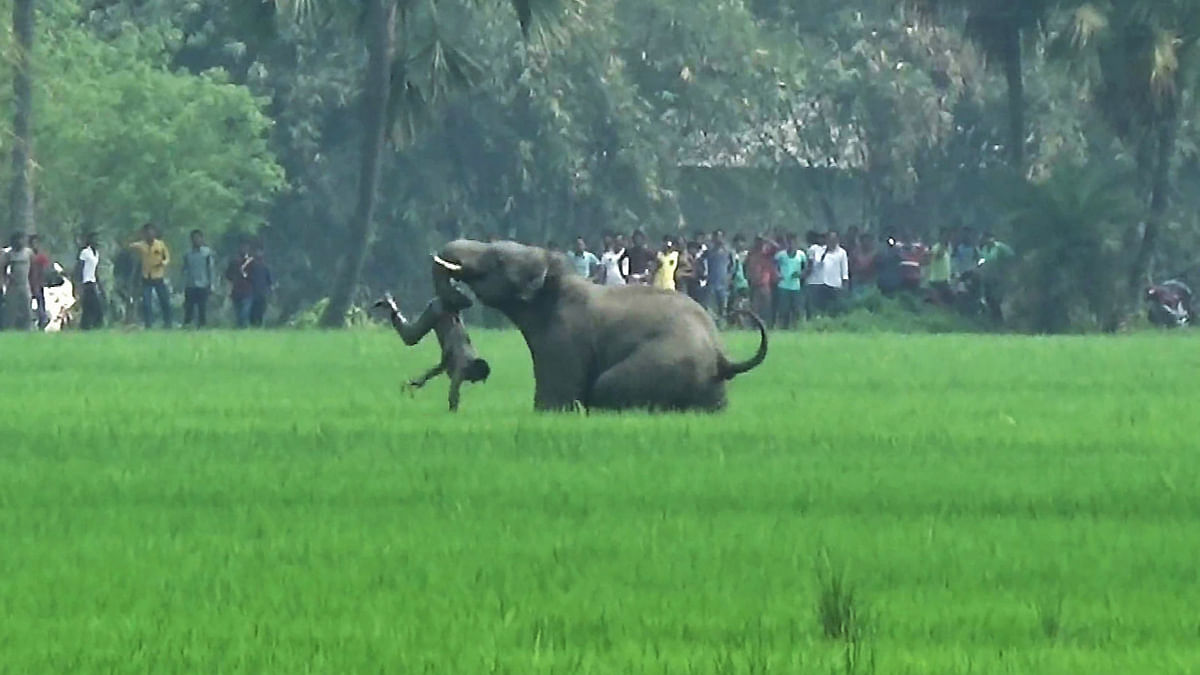
Human-animal conflict refers to the interactions and conflicts that arise between humans and wildlife when their interests and activities overlap. This conflict often occurs when human activities and development encroach upon natural habitats, leading to increased contact and competition for resources between humans and animals. The consequences of human-animal conflict can be detrimental to both parties and may include economic losses, damage to property, injury, and loss of life for both humans and animals.
Common scenarios of human-animal conflict include:
-
Crop Raiding: Wild animals may enter agricultural fields and damage crops, leading to economic losses for farmers.
-
Livestock Predation: Predatory animals may attack and kill domesticated animals, such as cattle, sheep, or poultry, causing financial losses for livestock farmers.
-
Urban Encroachment: As human populations expand and urban areas expand into natural habitats, animals may find themselves in close proximity to human settlements, leading to conflicts over space and resources.
-
Road Accidents: Animals crossing roads, especially in areas near forests or wildlife habitats, can lead to collisions with vehicles, resulting in injuries or fatalities for both humans and animals.
-
Attacks on Humans: In some cases, wild animals may perceive humans as a threat and may attack, leading to injuries or fatalities.
-
Conservation Challenges: Human-animal conflict can pose challenges for wildlife conservation efforts, as negative interactions with humans may lead to retaliation against wildlife, posing a threat to endangered species
Experts attribute the surge in incidents of human-wildlife conflict to various factors, including the expansion of cultivated areas around wildlife habitats, alterations in cropping patterns, a notable rise in the populations of animals like elephants and tigers resulting from conservation initiatives, and the movement of livestock and humans into wildlife habitats during unconventional hours. Additionally, there has been a significant upturn in the populations of prolific breeders such as wild boars and peacocks.
Notably, the increased frequency of conflicts involving elephants is primarily attributed to habitat depletion and fragmentation caused by human activities. Furthermore, the invasion of alien species has diminished the availability of food and water, while the cultivation of monoculture species like eucalyptus and acacia has adversely impacted plant biodiversity
4. Kerala State vs Human and Animal Conflict
- Approximately 30% of Kerala's land area is covered by forests. Given the relatively small size of the state, with an average width of approximately 70 km and a population exceeding 3.46 crore, numerous densely populated human settlements are situated in close proximity to protected forest regions.
- Additionally, many agricultural plantations are located near wildlife habitats, particularly in hilly areas, including the heavily forested eastern part of the state. While this geographical arrangement inevitably results in human-animal conflict, Kerala has experienced a notable surge in such incidents in recent years.
- Residents living near the fringes of forests have suffered substantial financial losses to their livelihoods, primarily due to frequent raids by elephants and wild boars. Since 2015, over 600 people in Kerala have lost their lives in conflicts with animals.
- This has triggered protests among affected villagers, some of which have escalated into open confrontations between protesters and officials from the State Forest department
- According to a study conducted by the State Forest department, Kerala experienced human-wildlife conflicts in 1,004 areas.
- The study documented more than 48,000 incidents of crop damage from 2013-14 to 2018-19. Among the 35 forest and wildlife divisions in the state, Nilambur north (94), Wayanad south (92), and Wayanad north (70) forest ranges reported the highest numbers of major conflict locations.
- The State recorded the highest number of incidents involving wild elephants, accounting for 14,611 occurrences between 2013-14 and 2018-19. Other contributors to these incidents include wild boars (5,518), bonnet macaques (4,405), and snakes (2,531).
- Elephants, bonnet macaques, and wild boars have caused significant damage to farmers living in forest fringe areas. Herbivores like sambar, spotted deer, and gaur have also played a considerable role in crop damage.
- The study reported a total of 814 livestock animals, including cattle, buffalo, and goats, being killed or injured in such attacks, with tigers preying on 420 of these animals
- Experts attribute the escalation in human-wildlife conflict incidents to several factors, including the expansion of cultivated areas surrounding wildlife habitats, alterations in cropping patterns, a notable rise in the populations of animals like elephants and tigers resulting from conservation efforts, and the movement of livestock and humans into wildlife habitats during unconventional hours.
- Additionally, there has been a significant upturn in the populations of prolific breeders such as wild boars and peacocks.
- However, the increased frequency of conflicts involving elephants can be traced to habitat depletion and fragmentation caused by human activities. Furthermore, the presence of invasive alien species has diminished the availability of food and water. The cultivation of monoculture species like eucalyptus and acacia has also had adverse effects on plant biodiversity
- Elephant-resistant trenches and solar-powered fences are commonly employed in Kerala and are generally deemed effective, provided they receive proper maintenance. However, there are several areas where these protective measures have not been implemented.
- Additionally, nearby residents often break these fences to allow their cattle to graze in the forests, and elephants themselves may damage the fences using their legs and tusks.
- In a master plan costing ₹620 crores to address this issue, the Forest department proposes the installation of elevated power fences that are beyond the reach of elephants.
- Furthermore, as part of the State government's new eco-restoration policy, the Forest department aims to plant suitable indigenous vegetation (wild mango, wild gooseberry, and wild jackfruit) in the forests to ensure food security for wild animals and discourage them from entering agricultural lands.
- Complementary measures include establishing early warning systems that utilize drones and human observers to track the movement of elephants and other dangerous animals, allowing people to avoid areas where they have been spotted. However, the widespread implementation of such warning mechanisms is lacking in Kerala.
- On the contrary, these measures are not effective against wild boars. Despite Kerala's request to declare wild boars as vermin still pending with the Centre, the State government has recently granted local bodies the authority to cull wild boars that pose threats to agricultural crops or human life.
- Other alternatives include capturing and neutering the boars or relocating them to forests where predators like tigers and leopards are present
Human-animal conflict is connected to the concept of Ecologically Sensitive Zones (ESZ) norms through the need to establish buffer areas around protected areas, wildlife habitats, and other ecologically sensitive zones. ESZ norms are guidelines and regulations aimed at minimizing human disturbances and activities that could negatively impact biodiversity and ecosystems in designated areas. These zones are established to create a buffer between human settlements and wildlife habitats, reducing the chances of conflict between humans and animals.
Here's how human-animal conflict is connected to ESZ norms:
-
Buffer Zones: ESZ norms often define buffer zones around national parks, wildlife sanctuaries, and other ecologically sensitive areas. These buffer zones act as a transitional space to mitigate the impacts of human activities on wildlife and vice versa.
-
Land Use Planning: ESZ norms include regulations related to land use planning around protected areas. By controlling and guiding developmental activities in these zones, there is an attempt to minimize disturbances to wildlife and their habitats, consequently reducing the likelihood of conflict.
-
Wildlife Corridors: ESZ norms may address the creation and preservation of wildlife corridors, which are crucial for the movement of animals between different habitats. Ensuring the connectivity of habitats helps in preventing isolated populations, which can lead to increased interactions and conflicts with humans.
-
Conservation Measures: ESZ norms may include measures to conserve and restore natural habitats. By maintaining the integrity of these habitats, the likelihood of wildlife straying into human-dominated landscapes in search of food or suitable habitat is reduced.
-
Community Engagement: Some ESZ norms encourage community engagement and participation in conservation efforts. Involving local communities in wildlife conservation can lead to better understanding and cooperation, reducing conflicts by promoting coexistence
|
Previous Year Questions
1.Consider the following statements in respect of Trade Related Analysis of Fauna and Flora in Commerce (TRAFFIC): (UPSC CSE 2017)
Which of the above statements is/are correct? (a) 1 only Answer: (b) 2.With reference to Indian elephants, consider the following statements: (UPSC CSE 2020) Which of the statements given above is/are correct? A.1 and 2 only B.2 and 4 only C.3 only D.1, 3 and 4 only Answer (A) 3.With reference to Indian laws about wildlife protection, consider the following statements: (UPSC CSE 2021) A.1 and 2 B.2 only C.1 and 3 D.3 only Answer (B) |
GRADED RESPONSE ACTION PLAN(GRAP)
1.Context
2.What is a Graded Response Action Plan (GRAP)
3.Has GRAP Helped?
- The biggest success of GRAP has been in fixing accountability and deadlines.
- For each action to be taken under a particular air quality category, executing agencies are marked.
- In a territory like Delhi, where a multiplicity of authorities has been a long-standing impediment to effective governance, this step made a crucial difference.
4.Measures that are taken in other states
- one criticism of the EPCA, as well as GRAP, has been the focus on Delhi. While other states have managed to delay several measures, citing a lack of resources, Delhi has always been the first to have stringent measures enforced.
- When the air quality shifts from poor to very poor, the measures listed under both sections have to be followed since the plan is incremental in naturality reaches the severe+ stage, GRAP talks about shutting down schools and implementing the odd-even road-space rationing scheme.
5.Actions under GRAP
Severe+ or Emergency |
(PM 2.5 OVER 300 300 µg/cubic metre or PM10 over 500µg/cu. m. for 48+ hours)
|
Severe |
(PM 2.5 OVER 250µg/cu. m. or PM10 over 430 µg/cu. m. )
|
Very Poor |
(PM2.5 121-250 µg/cu. m. or PM10 351-430 µg/cu.m. )
|
Moderate to Poor |
(PM2.5 61-120 µg/cu. m. or PM10 101-350 µg/cu. m.)
|
- The AQI is a colour-coded index launched under the Swachh Bharat campaign to simplify the understanding of pollution levels.
- It helps convey the condition of the air and guides appropriate measures based on the severity of pollution.
- The AQI consists of six categories, each with a corresponding colour code: 'Good' (0-50), 'Satisfactory' (51-100), 'Moderately Polluted' (101-200), 'Poor' (201-300), 'Very Poor' (301-400) and 'Severe' (401-500).

7. Commission for Air Quality Management (CAQM)
- The Commission for Air Quality Management (CAQM) was established by the Government of India in October 2020 to address the persistent and severe problem of air pollution in the National Capital Region (NCR) and adjoining states.
- It was later given statutory backing through the Commission for Air Quality Management in National Capital Region and Adjoining Areas Act, 2021. The Commission functions under the Ministry of Environment, Forest and Climate Change (MoEFCC).
- The CAQM was created in response to the recurring air pollution crisis in Delhi and surrounding areas, which often see hazardous air quality levels, especially during the winter months.
- The problem is aggravated by factors such as stubble burning in Punjab and Haryana, industrial and vehicular emissions, and construction dust. Earlier, multiple agencies such as the Central Pollution Control Board (CPCB), state pollution control boards, and environment departments operated independently, leading to poor coordination and weak enforcement. The CAQM was envisioned as a centralized, permanent body to unify and coordinate efforts across states.
- The Commission’s jurisdiction extends to Delhi, Punjab, Haryana, Rajasthan, and Uttar Pradesh, covering areas adjoining the NCR. It is headed by a Chairperson appointed by the Central Government—typically a former Secretary to the Government of India or a Chief Secretary of a state.
- The body includes representatives from central ministries, state governments, the CPCB, ISRO, and NITI Aayog, along with experts in environmental science and pollution control.
- The CAQM is responsible for monitoring, coordinating, and implementing air quality management plans across its jurisdiction. It formulates policies to prevent and control air pollution, enforces existing environmental laws, and ensures that central, state, and local authorities act in a coordinated manner.
- The Commission also plays a critical role in tackling stubble burning, a major seasonal contributor to pollution in northern India. It has the authority to issue directions to central, state, and local authorities, and its orders override those of other agencies within its jurisdiction. Moreover, the Commission possesses powers of a civil court, enabling it to summon individuals, demand documents, and take punitive actions against violators.
- The establishment of CAQM marks an important step in India’s environmental governance. By creating a single authority with comprehensive powers, the government sought to move away from fragmented approaches and ensure consistent, region-wide enforcement.
- However, despite its potential, the Commission faces challenges such as jurisdictional overlaps, limited manpower, and the lack of strong enforcement mechanisms at the local level. Successful functioning of CAQM ultimately depends on the cooperation of states, technological monitoring, and public awareness
For Prelims and Mains
|
For Prelims: Graded Response Action Plan, National Capital Region (NCR),Environmental pollution(prevention control)Authority (EPCA).
For Mains:
1. What is GRAP? What is the Delhi-NCR action plan as air pollution increases? (250 words).
|
|
Previous Year Questions
1.In the cities of our country, which among the following atmospheric gases are normally considered in calculating the value of the Air Quality Index? (2016)
Select the correct answer using the code given below: (a) 1, 2 and 3 only (b) 2, 3 and 4 only (c) 1, 4 and 5 only (d) 1, 2, 3, 4 and 5 Answer (b) |
SPECIAL INTENSIVE REVISION (SIR)
- The Special Intensive Revision (SIR) of the Electoral Rolls is an important exercise undertaken by the Election Commission of India (ECI) to ensure that the voter lists (electoral rolls) are accurate, updated, and inclusive before any major election or as part of the annual revision cycle.
- In simpler terms, the SIR is a comprehensive verification and correction process of the electoral rolls — aimed at including eligible voters, removing ineligible ones, and rectifying errors in the existing list.
- It is called “special” because it involves an intensified, house-to-house verification and greater public participation compared to the routine annual summary revision
- The purpose of the Special Intensive Revision is to maintain the purity, accuracy, and inclusiveness of India’s democratic process. Clean and updated voter rolls are essential for free, fair, and credible elections, as they prevent issues like bogus voting, disenfranchisement, and duplication.
- In summary, the Special Intensive Revision (SIR) is a focused, large-scale voter verification campaign conducted by the Election Commission to ensure that the electoral rolls are error-free, inclusive, and reflective of the current eligible voting population. It plays a crucial role in strengthening the integrity and transparency of India’s electoral system
|
During the Special Intensive Revision, Booth Level Officers (BLOs) visit households to verify voter details such as name, address, age, and photo identity. This exercise helps identify:
|
- Article 324(1) of the Indian Constitution empowers the Election Commission of India (ECI) with the authority to oversee, guide, and manage the preparation of electoral rolls as well as the conduct of elections for both Parliament and the State Legislatures.
- As per Section 21(3) of the Representation of the People Act, 1950, the ECI holds the right to order a special revision of the electoral roll for any constituency, or part of it, at any time and in a manner it considers appropriate.
- According to the Registration of Electors’ Rules, 1960, the revision of electoral rolls may be carried out intensively, summarily, or through a combination of both methods, as directed by the ECI.
- An intensive revision involves preparing an entirely new roll, while a summary revision deals with updating or modifying the existing one
| Aspect | Special Intensive Revision (SIR) | National Register of Citizens (NRC) |
| Purpose | To verify, update, and correct the electoral rolls so that all eligible voters are included and ineligible names are removed | To identify legal citizens of India and detect illegal immigrants |
| Authority / Governing Body | Conducted by the Election Commission of India (ECI) | Conducted under the Ministry of Home Affairs (MHA) |
| Legal Basis | Based on Article 324(1) of the Constitution, Section 21(3) of the Representation of the People Act, 1950, and the Registration of Electors' Rules, 1960. | Governed by the Citizenship Act, 1955 and the Citizenship (Registration of Citizens and Issue of National Identity Cards) Rules, 2003 |
| Scope | Focuses only on Indian citizens aged 18 years and above who are eligible to vote | Covers all residents of India (or a particular state) to determine their citizenship status |
| Nature of the Exercise | A regular, recurring administrative exercise carried out to maintain accurate voter lists | A special, large-scale verification exercise conducted under specific legal or political mandates. |
| Relation to Citizenship | Does not determine citizenship — only eligibility to vote | Directly determines citizenship status |
One of the major concerns is the erroneous deletion of eligible voters from the rolls.
-
Mistakes during house-to-house verification or data entry may lead to legitimate voters—especially migrants, daily-wage workers, and marginalized communities—being left out.
-
Such exclusions can directly affect voter participation and undermine the democratic process.
Despite the intensive verification, fake or duplicate names often remain due to poor coordination or outdated records.
-
Deaths, migrations, or multiple registrations in different constituencies are not always updated accurately.
-
This raises questions about the accuracy and credibility of the electoral rolls.
The SIR is a large-scale field operation requiring trained personnel, coordination among departments, and robust data systems.
-
Booth Level Officers (BLOs) are often overburdened with multiple duties and may not have sufficient time or training for thorough verification.
-
Limited digital infrastructure in rural areas can also hamper real-time data updates.
Electoral roll revisions, especially when conducted close to elections, can spark political allegations of bias or manipulation.
-
Parties may accuse each other or the Election Commission of targeting specific communities or constituencies.
-
Even unintentional errors can lead to trust deficits in the electoral process.
Addressing these concerns is vital to maintain trust in the Election Commission and uphold the credibility of India’s democratic system
|
For Prelims: Special Intensive Revision (SIR), National Register of Citizens (NRC), Election Commission of India (ECI)
For Mains: GS II - Indian Polity
|
Previous year Question1. Consider the following statements: (UPSC 2017)
1. The Election Commission of India is a five-member body.
2. Union Ministry of Home Affairs decides the election schedule for the conduct of both general elections and bye-elections.
3. Election Commission resolves the disputes relating to splits/mergers of recognized political parties.
Which of the statements given above is/are correct?
A. 1 and 2 only
B. 2 only
C. 2 and 3 only
D. 3 only
Answer: D
2. Consider the following statements : (UPSC 2021)
1. In India, there is no law restricting the candidates from contesting in one Lok Sabha election from three constituencies.
2. In the 1991 Lok Sabha Election, Shri Devi Lal contested from three Lok Sabha constituencies.
3. As per the- existing rules, if a candidate contests in one Lok Sabha election from many constituencies, his/her party should bear the cost of bye-elections to the constituencies vacated by him/her in the event of him/her winning in all the constituencies.
Which of the statements given above is/are correct?
A. 1 only
B. 2 only
C. 1 and 3
D. 2 and 3
Answer: B
Mains
1.To enhance the quality of democracy in India the Election Commission of India has proposed electoral reforms in 2016. What are the suggested reforms and how far are they significant to make democracy successful? (UPSC CSE 2017)
|
CRYPTO EXCHANGES
1. Context
2. What happened to Binance?
- Crypto exchange Binance handles tens of billions of dollars in trading volumes every day.
- Due to trading controls in the U.S. and strict oversight and registration procedures for crypto businesses, Binance did not allow U.S. customers to trade on Binance.com.
- But it offered the Binance.US trading platform to U.S.based users. The regulator alleged that Binance let “highvalue U.S. customers” access the international Binance.com platform. Binance.US is operated by Binance and BAM Trading Services Inc.
- The regulator alleged that BAM Trading and BAM Management US Holdings, Inc. misled investors about trading controls that did not exist on Binance. US.
- The regulator also stated that Binance and its CEO commingled and diverted customer funds while Mr. Zhao was controlling the operations of Binance.US in secret.
- The SEC has filed 13 charges against Binance entities and Mr. Zhao, alleging that they were “engaged in an extensive web of deception, conflicts of interest, lack of disclosure, and calculated evasion of the law.
3. What happened to Coinbase?
- The regulator alleged that Coinbase evaded disclosure requirements that were put in place to safeguard investors.
- The lawsuit charged that the exchange traded at least 13 crypto tokens that should have been registered.
- Coinbase said in a statement that it will continue its regular operations. Coinbase went public in 2021 during the crypto boom and opened at $381 a share on its first trading day. On Tuesday, the company’s shares were down to $51.61 apiece.
4. How will this impact Binance?
- At the basic level, the regulator’s actions will spook U.S.based crypto traders who use Binance’s services but wish to invest in crypto assets legally.
- The SEC’s message has made it clear that U.S. traders using both Binance.com and Binance.US are in danger of violating the law.
- The SEC also questioned the ability of Binance and its entities to keep its customers’ funds safe.
- “Defendants’ purposeful efforts to evade U.S. regulatory oversight while simultaneously providing securitiesrelated services to U.S. customers put the safety of billions of dollars of U.S. investor capital at risk and Binance’s and Zhao’s mercy.
5. How Binance has responded?
- Binance issued a statement saying that it was disappointed with the SEC and that it had previously cooperated with the regulator's investigations.
- The crypto exchange also accused the SEC of trying to make headlines rather than protecting investors.
- Binance stressed its intention to defend itself “vigorously.” It pointed out that as the U.S. regulator, the SEC’s control over the trading platform was limited because Binance was not a U.S. company.
6. Effect on Crypto Market
- The cryptocurrency market is small and extremely susceptible to shocks and spooks when compared to more mainstream finance sectors.
- After SEC’s lawsuit against Binance, the price of Bitcoin (BTC), the largest cryptocurrency by market capitalization, fell as much as 3.90% to retail at under $26,000.
- The second largest coin, Ether, fell by 2.96% in the same interval to trade below $1,900. Experienced investors may have already taken into account Binance’s legal tangles.
- But new investors may panic and sell their tokens. Others may wait to see how the regulatory landscape changes for the volatile crypto industry.
|
For Prelims: U.S. Securities and Exchange Commission (SEC), Binance, Coinbase, Crypto Currency, Bitcoin, Ether, Blockchain technology.
|
Previous year Question1. With reference to “Blockchain Technology”, consider the following statements: (UPSC 2020)
1. It is a public ledger that everyone can inspect, but which no single user controls.
2. The structure and design of the blockchain are such that all the data in it are about cryptocurrency only.
3. Applications that depend on the basic features of blockchain can be developed without anybody’s permission.
Which of the statements given above is/are correct?
A. 1 only
B. 1 and 2 only
C. 2 only
D. 1 and 3 only
Answer: D
2. With reference to 'Bitcoins', sometimes seen in the news, which of the following statements is/are correct? (UPSC 2016)
1. Bitcoins are tracked by the Central Banks of the countries.
2. Anyone with a Bitcoin address can send and receive Bitcoins from anyone else with Bitcoin address.
3. Online payments can be sent without either side knowing the identity of the other. Select the correct answer using the code given below.
A. 1 and 2 only
B. 2 and 3 only
C. 3 only
D. 1, 2 and 3
Answer: B
3. With reference to Non-Fungible Tokens (NFTs), consider the following statements:(UPSC 2022)
1. They enable the digital representation of physical assets.
2. They are unique cryptographic tokens that exist on a blockchain.
3. They can be traded or exchanged at equivalency and therefore can be used as a medium of commercial transactions.
Which of the statements given above is/are correct?
A. 1 and 2 only
B. 2 and 3 only
C. 1 and 3 only
D. 1, 2 and 3
Answer: A
|
16TH FINANCE COMMISSION
1. Context
2. Finance Commission
- The Finance Commission is a crucial constitutional body in India responsible for the distribution of financial resources between the central government and the state governments.
- It plays a vital role in maintaining fiscal federalism by ensuring a fair and equitable distribution of financial revenues and grants-in-aid among the various tiers of government.
- The Finance Commission is set up every five years, or at such earlier intervals as the President of India may decide, as per Article 280 of the Indian Constitution.
- It consists of a Chairman and four other members, each appointed by the President. These members are experts in the fields of economics, finance, and public administration.
3. Mandate and Functions
- The primary objective of the Finance Commission is to make recommendations to the President regarding the distribution of the net proceeds of taxes between the Union (central government) and the states, and the allocation of resources among the states.
- It also suggests measures to improve the financial position of the states, if necessary. The Commission's recommendations are aimed at addressing regional imbalances and ensuring the overall economic development of the country.
4. The specific functions of the Finance Commission include
- Tax Revenue Sharing: The Commission reviews the trends in revenue collections and recommends the percentage of the divisible pool of taxes that should be shared with the states. The divisible pool includes taxes like income tax, corporate tax, and excise duty.
- Grants-in-Aid: Besides the devolution of taxes, the Finance Commission also suggests grants-in-aid to states to support their financial requirements for various developmental projects and schemes.
- Debt Relief: The Commission may recommend measures to provide relief to states facing a high burden of debt, thereby promoting fiscal discipline.
- Macro-Fiscal Management: It examines the overall financial situation of the country and suggests measures to maintain macroeconomic stability.
- Any Other Matter: The President may also refer specific matters to the Commission for examination and recommendations.
5. Process of Working
- The Finance Commission follows a consultative process while formulating its recommendations.
- It seeks input from various stakeholders, including the central and state governments, local bodies, financial experts, and economists.
- The Commission examines historical data, financial indicators, and the needs of states to arrive at a comprehensive and objective assessment.
- After conducting detailed studies and consultations, the Commission submits its report to the President.
- The recommendations of the Finance Commission are ordinarily binding in nature, and both the central and state governments are expected to implement them. However, their acceptance depends on the discretion of the central government.
6. Importance
- The Finance Commission is crucial in maintaining the federal structure of India and ensuring that all states receive adequate financial support for their development.
- By promoting equitable distribution of resources, helps in reducing regional disparities and fostering balanced economic growth across the country.
- The Commission's recommendations also play a vital role in shaping the fiscal policies of both the central and state governments.
7. Recommendations of the Previous Finance Commission
13th Finance Commission Recommendations:
- Increase the number of court working hours using existing infrastructure.
- Enhance support to Lok Adalats.
- Provide additional funding to State Legal Services Authorities to enhance legal aid for the marginalized.
- Promote the use of Alternative Dispute Resolution (ADR) mechanisms.
- Enhance the capacity of judicial officers and public prosecutors through training programs.
- Support the creation of a judicial academy in every state for training purposes.
- Allocate funds for the setting up of specialized courts.
- Raised states' share in the divisible pool of central taxes to 42%
- Revised to 41% after the number of states reduced to 28
- The withdrawal of Planning Commission grants helped manage the situation
15th Finance Commission Recommendations:
- Gather quantifiable data on the level of various services available in different states.
- Collect corresponding unit cost data to estimate cost disabilities among states.
- Fill gaps in statistical data through the efforts of the Ministry of Statistics.
8. Need for realistic expectations regarding the following 16th Finance Commission
- Acknowledging Implementation Challenges: Recognize the challenges and complexities involved in implementing Finance Commission recommendations, such as coordination issues, administrative capacity, and resistance to change. This understanding will help shape realistic expectations and strategies for addressing these challenges.
- Strengthening Implementation Mechanisms: Focus on improving the implementation mechanisms and processes. This includes enhancing coordination and cooperation between the Union and state governments, strengthening administrative capacity at all levels, and streamlining the implementation of conditionalities to facilitate smoother execution.
- Robust Monitoring and Evaluation: Establish effective monitoring and evaluation mechanisms to track the progress and outcomes of implemented reforms. Regular assessment will help identify implementation gaps and provide opportunities for course correction and improvement.
|
For Prelims: Finance Commission, Article 280, Fiscal Consolidation, Fiscal Federalism, and Alternative Dispute Resolution (ADR) mechanism.
For Mains: 1. Discuss the Role and Challenges of the Finance Commission in Promoting Fiscal Federalism and Ensuring Equitable Resource Distribution in India. (250 words).
|
Previous year Question1. With reference to the Finance Commission of India, which of the following statements is correct? (UPSC 2011)
A. It encourages the inflow of foreign capital for infrastructure development.
B. It facilitates the proper distribution of finances among the Public Sector Undertaking.
C. It ensures transparency in financial administration.
D. None of the statements (a), (b), and (c) given above is correct in this context.
Answer: D
2. With reference to the Fourteenth Finance Commission, which of the following statements is/are correct? (UPSC 2015)
1. It has increased the share of States in the central divisible pool from 32 percent to 42 percent.
2. It has made recommendations concerning sector-specific grants.
Select the correct answer using the code given below.
A. 1 only
B. 2 only
C. Both 1 and 2
D. Neither 1 nor 2
Answer: A
3. Which of the following is/are among the noticeable features of the recommendations of the Thirteenth Finance Commission? (UPSC 2012)
1. A design for the Goods and Services Tax, and a compensation package linked to adherence to the proposed design.
2. A design for the creation of lakhs of jobs in the next ten years in consonance with India's demographic dividend.
3. Devolution of a specified share of central taxes to local bodies as grants
Select the correct answer using the codes given below:
A. 1 only
B. 2 and 3 only
C. 1 and 3 only
D. 1, 2 and 3
Answer: C
|
FREE TRADE AGREEMENT
1. Context
2. About the Free Trade Agreement
- A Free Trade Agreement (FTA) is an agreement between two or more countries to reduce or eliminate barriers to trade, such as tariffs, quotas, and subsidies.
- FTAs can also include provisions on other issues, such as investment, intellectual property, and labour standards.
- The goal of an FTA is to promote trade and economic growth between the signatory countries.
- By reducing or eliminating trade barriers, FTAs can make it easier for businesses to export their goods and services to other countries, which can lead to increased production, employment, and innovation.
3. Types of Free Trade Agreement
- Bilateral Free Trade Agreement (BFTA) involves two countries, aiming to promote trade and eliminate tariffs on goods and services between them. It establishes a direct trade relationship, allowing for a more focused and tailored agreement between the two nations.
- Multilateral Free Trade Agreement (MFTA) Involving three or more countries, an MFTA seeks to create a comprehensive trade bloc, promoting economic integration on a larger scale. It requires coordination among multiple parties, addressing diverse economic interests and fostering a broader regional economic landscape.
- Regional Free Trade Agreement (RFTA) involves countries within a specific geographic region, aiming to enhance economic cooperation and integration within that particular area. It focuses on addressing regional economic challenges and fostering collaboration among neighbouring nations.
- Preferential Trade Agreement (PTA) involves a reciprocal reduction of tariffs and trade barriers between participating countries, granting preferential treatment to each other's goods and services. It allows countries to enjoy trading advantages with specific partners while maintaining autonomy in their trade policies with non-participating nations.
- Comprehensive Economic Partnership Agreement (CEPA) is a broad and advanced form of FTA that goes beyond traditional trade barriers, encompassing various economic aspects such as investment, intellectual property, and services. It aims for a more comprehensive economic partnership, encouraging deeper integration and collaboration between participating countries.
- Customs Union While not strictly an FTA, a Customs Union involves the elimination of tariffs among member countries and the establishment of a common external tariff against non-member nations. It goes beyond standard FTAs by harmonizing external trade policies, creating a unified approach to trade with the rest of the world.
- Free Trade Area (FTA) with Trade in Goods (TIG) and Trade in Services (TIS): Some FTAs specifically emphasize either trade in goods or trade in services, tailoring the agreement to the specific economic strengths and priorities of the participating countries. This approach allows nations to focus on areas where they have a comparative advantage, fostering specialization and efficiency.
4. India's Free Trade Agreements
India is a member of several free trade agreements (FTAs) and is currently negotiating others. India's FTAs have helped to reduce trade barriers and promote trade and economic growth. They have also helped to attract foreign investment and create jobs.
- The South Asian Free Trade Agreement (SAFTA) was signed in 1995 by the seven countries of the South Asian Association for Regional Cooperation (SAARC). SAFTA aims to reduce or eliminate tariffs on trade between the member countries.
- The India-Bangladesh FTA was signed in 2010 and came into force in 2011. It is a comprehensive FTA that covers goods, services, and investments.
- The India-Sri Lanka FTA was signed in 1999 and came into force in 2000. It is a comprehensive FTA that covers goods, services, and investments.
- The India-ASEAN Free Trade Agreement was signed in 2002 and came into force in 2010. It is a comprehensive FTA that covers goods, services, and investments.
- The India-Korea Comprehensive Economic Partnership Agreement (CEPA) was signed in 2010 and came into force in 2011. It is a comprehensive FTA that covers goods, services, and investments.
- The India-Japan Comprehensive Economic Partnership Agreement(CEPA) was signed in 2022 and came into effect in 2023. It is a comprehensive FTA that covers goods, services, and investments.
- The India-UAE Comprehensive Partnership Agreement (CEPA) was signed in 2022 and came into effect in 2022. It is a comprehensive FTA that covers goods, services, and investments.
- The India-Australia Economic Cooperation and Trade Agreement (ECTA) was signed in 2022 and came into effect in 2022. It is a comprehensive FTA that covers goods, services, and investments.
- The India-Malaysia Comprehensive Economic Cooperation Agreement (CECA) was signed in 2010 and aims to enhance economic ties by addressing trade in goods and services, as well as investment and other areas of economic cooperation.
- The India-Thailand Free Trade Agreement was signed in 2003 and focuses on reducing tariffs and promoting trade in goods and services between India and Thailand.
- The India-Singapore Comprehensive Economic Cooperation Agreement (CECA) has been operational since 2005, this agreement covers trade in goods and services, as well as investment and intellectual property.
- The India-Nepal Trade Treaty While not a comprehensive FTA, India and Nepal have a trade treaty that facilitates the exchange of goods between the two countries.
- The India-Chile Preferential Trade Agreement was signed in 2006 and aims to enhance economic cooperation and reduce tariffs on certain products traded between India and Chile.
5. India - UK Free Trade Agreement
5.1. Background
- Both countries have agreed to avoid sensitive issues in the negotiations.
- The interim (early harvest agreement) aims to achieve up to 65 per cent coverage for goods and up to 40 per cent coverage for services.
- By the time the final agreement is inked, the coverage for goods is expected to go up to "90 plus a percentage" of goods.
- India is also negotiating a similar early harvest agreement with Australia, which is supposed to set the stage for a long-pending Comprehensive Economic Cooperation Agreement that both countries have been pursuing for nearly a decade.
- While the commencement of negotiations does mark a step forward in the otherwise rigid stance adopted and when it comes to trade liberalisation, experts point to impediments and the potential for legal challenges going ahead.
5.2. GATT (General Agreement on Trade and Tariffs)
- The exception to the rule is full-scale FTAs, subject to some conditions.
- One rider, incorporated in Article XXIV.8 (b) of GATT, stipulates that a deal should aim to eliminate customs duties and other trade barriers on "Substantially all the trade" between the WTO member countries that are signatories to an FTA.
- For this Agreement, a free-trade area shall be understood to mean a group of two or more customs territories in which the duties and other restrictive regulations of commerce are eliminated on substantially all the trade between the constituent territories in products originating in such territories.
- It is often beneficial to negotiate the entire deal together, as an early harvest deal may reduce the incentive for one side to work towards a full FTA.
- These agreements are not just about goods and services but also issues like investment.
- If you are trying to weigh the costs and benefits, it is always better to have the larger picture in front of you.
- In the case of the early harvest agreement inked with Thailand, automobile industry associations had complained that relaxations extended to Bangkok in the early harvest had reduced the incentive for Thailand to work towards a full FTA.
- Early harvest agreements may serve the function of keeping trading partners interested as they promise some benefits without long delays, as India becomes known for long-drawn negotiations for FTAs.
- Government emphasis on interim agreements may be tactical so that a deal may be achieved with minimum commitments and would allow for contentious issues to be resolved later.
|
For Prelims: Free Trade Agreement, India-U.K, Bilateral Free Trade Agreement, G-20 Summit, Agenda 2030, Covid-19 Pandemic, SAARC, General Agreement on Trade and Tariffs, Comprehensive Economic Partnership Agreement, Multilateral Free Trade Agreement, Regional Free Trade Agreement, Preferential Trade Agreement, Customs Union,
For Mains:
1. Evaluate the potential impact of the India-UK FTA on the Indian economy, considering both positive and negative aspects (250 Words)
2. Critically evaluate the significance of Free Trade Agreements (FTAs) in promoting trade and economic growth, considering their potential benefits and drawbacks. (250 Words)
|
|
Previous Year Questions
1. Consider the following countries:
1. Australia
2. Canada
3. China
4. India
5. Japan
6. USA
Which of the above are among the free-trade partners' of ASEAN? (UPSC 2018)
A. 1, 2, 4 and 5 B. 3, 4, 5 and 6 C. 1, 3, 4 and 5 D. 2, 3, 4 and 6
Answer: C
2. Increase in absolute and per capita real GNP do not connote a higher level of economic development, if (UPSC 2018) (a) Industrial output fails to keep pace with agricultural output. Answer: C 3. The SEZ Act, 2005 which came into effect in February 2006 has certain objectives. In this context, consider the following: (2010)
Which of the above are the objectives of this Act? (a) 1 and 2 only (b) 3 only (c) 2 and 3 only (d) 1, 2 and 3 Answer: A 4. A “closed economy” is an economy in which (UPSC 2011) (a) the money supply is fully controlled Answer: D 5. With reference to the “G20 Common Framework”, consider the following statements: (UPSC 2022)
1. It is an initiative endorsed by the G20 together with the Paris Club. 2. It is an initiative to support Low Income Countries with unsustainable debt. Which of the statements given above is/are correct? (a) 1 only (b) 2 only (c) Both 1 and 2 (d) Neither 1 nor 2 Answer: C
|
RARE EARTH ELEMENTS
| The 17 rare earths are cerium (Ce), dysprosium (Dy), erbium (Er), europium (Eu), gadolinium (Gd), holmium (Ho), lanthanum (La), lutetium (Lu), neodymium (Nd), praseodymium (Pr), promethium (Pm), samarium (Sm), scandium (Sc), terbium (Tb), thulium (Tm), ytterbium (Yb), and yttrium (Y) |

- These elements are important in technologies of consumer electronics, computers and networks, communications, clean energy, advanced transportation, healthcare, environmental mitigation, and national defence, among others
- Scandium is used in televisions and fluorescent lamps, and yttrium is used in drugs to treat rheumatoid arthritis and cancer
- Rare earth elements are used in space shuttle components, jet engine turbines, and drones
- Cerium, the most abundant rare earth element, is essential to NASA’s Space Shuttle Programme
- In recent years, rare earths have become even more important because there has been an increase in demand for green energy
- Elements like neodymium and dysprosium, which are used in wind turbine motors, are sought-after more than ever as wind mills across the world continue to grow
- Moreover, the push for switching from internal combustion cars to electric vehicles has also led to a rise in demand for rare earth magnets made from neodymium, boron, and iron and batteries
- China has imposed restrictions on the export of seven rare earth elements (REEs) — dysprosium, gadolinium, lutetium, samarium, scandium, terbium, and yttrium — which are part of the 17 REEs.
- The country dominates the global refining of heavy REEs, giving it substantial control over critical supply chains, ranging from consumer electronics to defense. Although these measures do not constitute a complete export ban, they may cause temporary supply disruptions, as exporters navigate the permit process.
- India may not face an immediate disruption due to these restrictions. Despite government efforts to enhance domestic manufacturing of semiconductors and defense systems, the more sophisticated phases of production largely take place abroad, particularly in China and Japan. Japan, in anticipation of such issues, has already built stockpiles to buffer against REE-related supply shocks.
- Recognizing the strategic importance of REEs, India is aware that it holds around 6% of global deposits. However, the country’s capacity for mining and refining is minimal, largely due to the environmental challenges associated with such operations.
- India does extract some light REEs through its state-run firm, Indian Rare Earths Ltd, including monazite from coastal sands in Kerala. Nonetheless, imports still play a role.
- According to a recent statement by the Ministry of Mines in the Lok Sabha, India imported approximately 2,270 tonnes of REEs in 2023–24. Consequently, the national approach involves a mix of increasing domestic output and maintaining import channels
To support the strategic use of essential resources such as rare earth elements, India has launched the National Critical Mineral Mission (NCMM). This initiative aims to strengthen the country’s supply chain for critical minerals by boosting domestic production and establishing alternative international supply partnerships. According to a presentation by the Ministry of Mines in January, global events like China’s export restrictions, the Russia–Ukraine conflict, and other geopolitical factors have exposed vulnerabilities in the global critical mineral supply, underscoring the urgency of diversifying sources.
As part of the NCMM, the Indian government plans to oversee or support around 1,200 mineral exploration projects. It also intends to offer exploration licenses to encourage private sector participation and conduct auctions for additional critical mineral blocks
|
For Prelims: Applications of rare earths, rare earth elements
For Mains:
1.Europe’s largest known deposit of rare earth elements found in Sweden: Could the discovery change geopolitics?
|
|
Previous Year Questions
1.Recently, there has been a concern over the short supply of a group of elements called ‘rare earth metals’. Why? (2012)
Which of the statements given above is/are correct? (a) 1 only Answer (c)
|
PERIODIC LABOUR FORCE SURVEY (PLFS)
1. Context
2. About The Periodic Labour Force Survey (PLFS)
- The Periodic Labour Force Survey (PLFS) is a sample survey conducted by the National Sample Survey Office (NSSO) of India to provide information on the labour force and employment situation in the country.
- The survey is conducted annually in all the states and union territories of India.
- The PLFS provides data on various employment indicators, including the labour force participation rate (LFPR), unemployment rate (UR), worker population ratio (WPR), and employment by industry and occupation.
- The PLFS sheds light on the proportion of individuals seeking employment, the unemployment rate, gender disparities in employment and wages, and the sectoral distribution of workers.
- Additionally, it details the types of employment, such as casual labour, self-employment, and regular salaried jobs.
- This comprehensive data is crucial for understanding the dynamics of the Indian labour market and formulating effective employment strategies.
- The Periodic Labour Force Survey (PLFS) collects employment data using two methods: Usual Status (US) and Current Weekly Status (CWS).
- In the US method, respondents are asked to recall their employment details for the past year, while in the CWS method, they are asked to recall their employment details for the past week.
- The labour force estimate derived from the US method includes individuals who worked or were seeking/available for work for a significant portion of the past year, as well as those who worked for at least 30 days during the reference period.
- Conversely, the labour force estimate based on the CWS method encompasses those who worked for at least one hour or sought/were available for work for at least one hour on any day during the past week.
- The global trend has shifted towards a greater emphasis on CWS data due to the improved accuracy of recall for shorter reference periods.
4. Latest findings of the Report
Unemployment Rate (UER)
- The UER is often the most talked about metric in popular discourse. Simply put, it refers to the proportion of people who demanded work over the past year and failed to get it.
- As the data in Table 1 shows, for the population above 15 years of age, the UER has fallen significantly from 6.6% to 5.1% over the last year (that is, July to June cycle).
- Simply put, 5.1% of all the people above 15 years of age who demanded work failed to get one.
Labour Force Participation Rate (LFPR)
- The Unemployment Rate (UER) is calculated as a proportion of the population that is demanding work.
- However, this population also fluctuates for various reasons. The Labor Force Participation Rate (LFPR) is a measure of the total population demanding work, expressed as a proportion of the total population above 15 years of age.
- As seen in Table 1, India's LFPR, which had been gradually increasing, has experienced a significant surge in the past year.
- As of 2022-23, 54.6% of all Indians above the age of 15 were actively seeking employment.
LFPR for women
- This metric looks at LFPR among women to ascertain where the additional demand for jobs is coming from.
- The data shows that female LFPR has gone up over the years but there were two discrete step-ups one in 2019-20 (when India’s GDP growth rate had slowed down to less than 4% and this was before the Covid pandemic hit) and the second in 2022-23 when it rose to 31.6%.
Worker Population Rate
- Since the proportion of people demanding work (the LFPR) goes up and down and the percentage of those failing to get a job (the UER) is expressed as a proportion of the former, it can throw off analysis.
- As such, there is another way to look at the labour market: Worker Population Ratio (WPR).
- The WPR is the percentage of persons employed among the persons in the population.
- Thus, instead of looking at how many demand a job and how many fail to get it, the WPR simply gives a measure of how many people have a job as a proportion of the total population.
- This metric too has been going up and especially noteworthy are the two discrete
step-ups in 2019-20 and 2022-23.
WPR among women
Monthly earnings
Distribution of workers
5. Key Trends in PLFS 2022-23
- Upon initial analysis, the Periodic Labour Force Survey (PLFS) for 2022-23 reveals several encouraging trends. The unemployment rate is on a downward trajectory, and both the Labor Force Participation Rate (LFPR) and Workforce Participation Rate (WPR) exhibit substantial increases. A particularly heartening development is the notable rise in the participation of women in the workforce. This suggests a positive correlation between economic recovery and the creation of more employment opportunities, especially for women.
- However, a closer examination of the nature and remuneration of these new jobs alters the understanding. The predominant trend is the emergence of jobs falling under the category of "self-employment." Typically, in a growing economy, businesses tend to hire more employees. Conversely, during economic challenges, individuals often transition from regular employment to "self-employed" status. This nuanced perspective prompts a reconsideration of the quality and sustainability of the employment being generated.
- Analyzing the trends among women across various metrics reveals an interesting dynamic. The data suggests that economic strains on household finances have led more women, previously outside the workforce, to join in. However, a noteworthy observation is the prevalence of women taking up roles as "unpaid helpers in household enterprises," highlighting a complex interplay between economic conditions and women's workforce participation.
- Furthermore, an examination of the sectoral landscape indicates a regressive shift in India's employment patterns. Notably, there has been an increase in the proportion of Indians employed in agriculture over the past year, while the numbers in manufacturing have witnessed a decline. This shift underscores the evolving economic dynamics and sectoral preferences shaping the employment scenario.
- In a thriving economy, one would expect an improvement in monthly incomes. However, the Indian scenario deviates from this expectation. Despite positive indicators in other areas, the data suggests that the overall economic boom is not translating into significant improvements in monthly incomes for individuals in India. This anomaly prompts a closer examination of the factors contributing to this divergence.
6. The WayForward
While there are positive signals in the headline indicators, a more nuanced analysis reveals complexities like job creation, women's participation dynamics, sectoral shifts, and income patterns. This holistic perspective is essential for a comprehensive understanding of the multifaceted impact of economic trends on the labour market in India.
|
For Prelims: Periodic Labour Force Survey, National Sample Survey Office, labour force participation rate, worker population ratio
For Mains:
1. Examine the changing nature of employment in India, as reflected in the increasing share of self-employment and the declining proportion of regular salaried jobs. Discuss the implications of this shift for the quality and sustainability of employment. (250 Words)
|
|
Previous Year Questions 1. Given below are two statements, one is labeled as Assertion (A) and the other as Reason (R). (UPPSC 2019)
Assertion (A): The labour force participation rate is falling sharply in recent years for females in India.
Reason (R): The decline in labour force participation rate is due to improved family income and an increase in education.
Select the correct answer from the codes given below:
Codes:
A. Both (A) and (R) are true and (R) is the correct explanation of (A)
B. Both (A) and (R) are true and (R) is not the correct explanation of (A)
C. (A) is true, but (R) is false
D. (A) is false, but (R) is true
2. Which of the following statements about the employment situation in India according to the periodic Labour Force Survey 2017-18 is/are correct? (UPSC CAPF 2020)
1. Construction sector gave employment to nearly one-tenth of the urban male workforce in India
2. Nearly one-fourth of urban female workers in India were working in the manufacturing sector
3. One-fourth of rural female workers in India were engaged in the agriculture sector
Select the correct answer using the code given below:
A. 2 only B. 1 and 2 only C. 1 and 3 only D. 1, 2 and 3
3. Disguised unemployment generally means (UPSC 2013)
(a) large number of people remain unemployed
4. Assertion (A): Workers - population ratio in India is low in contrast to that in developed countries. Reason (R): Rapid growth of population, low female worker population rate and omission of unpaid family workers lead to low worker-population ratio. Choose the correct answer: (Telangana Police SI Mains 2018) A. (A) is true, but (R) is false.
B. (A) is false, but (R) is true.
C. Both (A) and (R) are true, but (R) is not a correct explanation of (A).
D. Both (A) and (R) are true, but (R) is the correct explanation of (A).
Answers: 1-C, 2-B, 3-C, 4-D Mains1. Most of the unemployment in India is structural in nature. Examine the methodology adopted to compute unemployment in the country and suggest improvements. (UPSC 2023) |
Source: The Indian Express


