
AIR QUALITY INDEX (AQI)
1. Context
2. The Air Quality Index (AQI)
The AQI is a colour-coded index launched under the Swachh Bharat campaign to simplify the understanding of pollution levels. It helps convey the condition of the air and guides appropriate measures based on the severity of pollution. The AQI consists of six categories, each with a corresponding colour code: 'Good' (0-50), 'Satisfactory' (51-100), 'Moderately Polluted' (101-200), 'Poor' (201-300), 'Very Poor' (301-400) and 'Severe' (401-500).
3. Calculation of AQI
- To calculate the AQI, a technical study was conducted by an expert group, including medical professionals, air quality experts, and academics.
- Various pollutants, such as PM10, PM2.5, Nitrogen Dioxide, Ozone, Carbon, and others, are measured.
- Each pollutant is assigned a weight based on its impact on human health.
- The composite air quality index is determined by combining these weights, simplifying multiple data points into a single number and colour to represent overall air quality.
- Monitoring stations across the country assess these pollutant levels.
4. Impact of Pollutants on Health
- Among the most harmful pollutants are fine particulate matter, such as PM2.5, which has a diameter smaller than 2.5 micrometres.
- PM2.5 particles can easily enter the circulatory system, bypassing the nose and throat.
- They are associated with respiratory problems and reduced visibility, posing health risks such as asthma, heart attacks, bronchitis, and other respiratory issues.
5. Influence on Government Policy
- Governments, especially in areas like Delhi, use the AQI to announce measures to combat air pollution.
- When the AQI in the National Capital Region (NCR) reaches the 'severe' category, Stage 4 of the Graded Response Action Plan (GRAP) is implemented.
- GRAP is designed for emergency measures to prevent further deterioration of air quality.
- Specific actions may include prohibiting the use of non-BS-VI-compliant diesel four-wheelers and restricting the entry of trucks into the city while allowing petrol cars to continue operating as usual.
6. Conclusion
The Air Quality Index is an essential tool that simplifies the understanding of air pollution, assesses its health impacts, and influences government policies and actions to combat deteriorating air quality. As Mumbai braces for worsening air quality, the AQI will continue to be a critical resource for both the government and the public.
|
For Prelims: Air Pollution, Air Quality Index, PM 2.5, PM 10, BS-VI Vehicles, Graded Response Action Plan, National Capital Region, Nitrogen Dioxide, Ozone, Carbon,
For Mains:
1. With the onset of worsening air quality in Mumbai, discuss the importance of the AQI as a critical resource for both the government and the public. How can the AQI assist in addressing air pollution-related challenges in the upcoming winter months? (250 Words)
|
|
Previous Year Questions 1. In the cities of our country, which among the following atmospheric gases are normally considered in calculating the value of Air Quality Index? (UPSC 2016)
Select the correct answer using the code given below: A. 1, 2 and 3 only B. 2, 3 and 4 only C. 1, 4 and 5 only D. 1, 2, 3, 4 and 5 Answer: B 2. Which of the following are the reasons/factors for exposure to benzene pollution? (UPSC 2020)
Select the correct answer using the code given below: A. 1, 2 and 3 only B. 2 and 4 only C. 1, 3 and 4 only D. 1, 2, 3, 4 and 5 Answer: A 3. What is the ‘Greenhouse Gas Protocol’? (UPSC 2016) (a) It is an international accounting tool for government and business leaders to understand, quantify and manage greenhouse gas emissions (b) It is an initiative of the United Nations to offer financial incentives to developing countries to reduce greenhouse gas emissions and to adopt eco-friendly technologies. (c) It is an inter-governmental agreement ratified by all the member countries of the United Nations to reduce greenhouse gas emissions to specified levels by the year 2022 (d) It is one of the multilateral REDD+ initiatives hosted by the World Bank Answer: A 4. Photochemical smog is a resultant of the reaction among (UPSC 2013) (a) NO2, O3 and peroxyacetyl nitrate in the presence of sunlight (b) CO, O2 and peroxyacetyl nitrate in the presence of sunlight (c) CO, CO2 and NO2 at low temperature (d) high concentration of NO2 O3 and CO in the evening
Answer: A
5. Acid rain is caused by the pollution of the environment (UPSC 2013, 2022) (a) Carbon Dioxide and Nitrogen (b) Carbon Monoxide and Carbon Dioxide (c) Ozone and Carbon Dioxide (d) Nitrous Oxide and Sulphur Dioxide Answer: D
6. Biological Oxygen Demand (BOD) is a standard criterion for (UPSC 2017) (a) Measuring oxygen level in blood (b) Computing oxygen levels in forest ecosystems (c) Pollution assay in aquatic ecosystem (d) Assessing oxygen levels in high-altitude regions Answer: C 7. The Ministry of Environment, Forest and Climate Change recently published the draft Environment Impact Assessment (EIA) Notification, in 2020. Which of the following statements is correct about EIA? (Punjab Civil Service 2020)
1. It predicts the effect of a proposed industrial/infrastructural project on the environment.
2. It prevents the proposed activity/project from being approved without proper oversight or taking adverse consequences into account.
3. It compares various alternatives for a project and seeks to identify the one which represents the best combination of economic and environmental costs and benefits.
4. As per the new notification, Coal and non-Coal mineral prospecting and solar photovoltaic projects do not need prior environmental clearance.
Select the correct answer using the code given below:
A. Only 1 and 2
B. Only 2, 3 and 4
C. Only 1, 2 and 3
D. Only 1, 2 and 4
Answer: D
8. Headquarters of the World Meteorological Organization is located in (NDA 2017)
A. Washington B. Geneva C. Moscow D. London
Answer: B
9. With reference to the 'Global Climate Change Alliance', which of the following statements is/are correct? (UPSC 2017)
1. It is an initiative of the European Union.
2. It provides technical and financial support to targeted developing countries to integrate climate change into their development policies and budgets.
3. It is coordinated by World Resources Institute (WRI) and World Business Council for Sustainable Development (WBCSD)
Select the correct answer using the code given below:
A. 1 and 2 only B. 3 only C. 2 and 3 only D. 1, 2 and 3
Answer: A
10. The IPCC is the United Nations body for assessing the science related to climate change. IPCC stands for: (RRB NTPC CBT 2 2022)
A. Intergovernmental Provision on Climate Change
B. International Panel on Climate Change
C. International Provision on Climate Change
D. Intergovernmental Panel on Climate Change
Answer: D
11. Comprehension (SSC CHSL 2020)
Direction: In the following passage some words have been deleted. Fill in the blanks with the help of the alternatives given. Select the most appropriate option for each blank.
Forest fire always (1) ______ by one of two reasons-naturally caused or human-caused. Natural fire is generally (2) ______ by lightning, with a very small percentage (3) ______ by spontaneous combustion of dry fuel such as sawdust and leaves. (4) ______, human-caused fire can happen (5) ______ any number of reasons.
Select the most appropriate option for blank No. 1.
A. takes up B. happens C. causes D. creates
Answer: B
12. Which of the following statements best describes the term 'Social Cost of Carbon'? It is a measure, in monetary value, of the (UPSC 2020)
A. long-term damage done by a tonne of CO2 emission in a given year.
B. requirement of fossil fuels for a country to provide goods and services to its citizens, based on the burning of those fuels.
C. efforts put in by a climate refugee to adapt to live in a new place.
D. contribution of an individual person to the carbon footprint on the planet Earth.
Answer: A
13. The increasing amount of carbon dioxide in the air is slowly raising the temperature of the atmosphere, because it absorbs (UPSC 2012)
A. the water vapour of the air and retains its heat
B. the ultraviolet part of the solar radiation
C. all the solar radiations
D. the infrared part of the solar radiation
Answer: D
14. As per the World Health Organisation (WHO) recommendation of a balanced diet, to avoid unhealthy weight gain, total fat should NOT exceed _______ of total energy intake. (UPSSSC Mandi Inspector 2019)
A. 20% B. 30% C. 10% D. 40%
Answer: B
15. What is the role of ultraviolet (UV) radiation in the water purification systems? (UPSC 2012)
1. It inactivates/kills the harmful microorganisms in water.
2. It removes all the undesirable odours from the water.
3. It quickens the sedimentation of solid particles, removes turbidity and improves the clarity of water.
Which of the statements given above is/are correct?
A. 1 only B. 2 and 3 only C. 1 and 3 only D. 1, 2 and 3
Answer: A
16. Which of the following ultraviolet rays is more dangerous? (UPTET 2017)
A. UV-A B. UV-B C. UV-C D. None of the above
Answer: C
17. Consider the following statements: (UPSC 2019)
1. Agricultural soils release nitrogen oxides into environment.
2. Cattle release ammonia into environment.
3. Poultry industry releases reactive nitrogen compounds into environment.
Which of the statements given above is/are correct?
A. 1 and 3 only B. 2 and 3 only C. 2 only D. 1, 2 and 3
Answer: D
18. Which of the following is a VOC? (MP Vyapam 2022)
A. Toulene B. Water C. Carbon dioxide D. Carbon monoxide
Answer: A
19. Volatile Organic Compounds (VOCs) are of great concern because (UGC NET Environmental Science 2020)
A. Once such compounds are in the vapour state, they are difficult to control in the environment.
B. Most of them are ozone depleting substances
C. They contribute to a general increase in reactive hydrocarbons in the atmosphere.
D. They are less soluble in water.
Answer: C
|
Source: The Indian Express
CRITICAL MINERALS
- Rare Earth Elements (REEs): neodymium, dysprosium, terbium
- Lithium
- Cobalt
- Graphite
- Gallium
- Indium
- Tungsten
- Platinum Group Metals (PGMs)
.jpg)
- Minerals such as copper, lithium, nickel, and cobalt, along with certain rare earth elements, are considered critical due to their essential role in the global transition to greener and cleaner energy sources.
- According to the International Energy Agency (IEA), the demand for lithium surged by 30% in 2023, with nickel, cobalt, graphite, and rare earth elements experiencing growth between 8% and 15%, collectively valued at $325 billion.
- The IEA's Global Critical Minerals Outlook 2024 report indicates that achieving the world's goal of limiting global warming to 1.5 degrees Celsius within a net-zero emissions framework will necessitate a significant increase in demand for these minerals.
- By 2040, copper demand is projected to rise by 50%, nickel, cobalt, and rare earth elements by 100%, graphite by 300%, and lithium by 800%, which is vital for battery production.
- Developing sustainable supply chains for these minerals is therefore crucial. In India, the absence of readily available reserves has led to complete import dependence for minerals such as lithium, cobalt, and nickel.
- Although India possesses natural reserves of several critical minerals, they remain largely unexplored and untapped. For example, despite holding 11% of the world's ilmenite deposits, which is the primary source of titanium dioxide used in numerous applications, India still imports a billion dollars' worth of titanium dioxide annually, as noted by former Mines Secretary Vivek Bharadwaj.
- Additionally, the "lucky" discovery of lithium reserves in the Union Territory of Jammu and Kashmir (J&K) by the Geological Survey of India (GSI) while exploring for limestone has raised hopes for achieving some level of self-sufficiency in lithium. Announced in February as India's first lithium find, these reserves are estimated at 5.9 million tonnes, prompting the government to expedite their extraction.
- Recognizing the risks of relying on a limited number of countries for these minerals and their processing, the central government amended the Mines and Minerals (Development and Regulation) Act, 1957 in August 2023 to allow mining concessions for 24 critical and strategic minerals.
|
For Prelims: Critical minerals, Ministry of Mines, carbon emissions, cleaner energy, lithium, cobalt, nickel, graphite, tin, copper, Selenium, Cadmium, Centre of Excellence on critical minerals, Australia's CSIRO, Geological Survey of India,
For Mains:
1. What are critical minerals? Discuss their significance for a country's economic development and national security. Explain how the identification of critical minerals helps in reducing import dependency and ensuring resource security. (250 Words)
|
|
Previous Year Questions
1. With reference to the mineral resources of India, consider the following pairs: (UPSC 2010)
Mineral 90%Natural sources in
1. Copper Jharkhand
2. Nickel Orissa
3. Tungsten Kerala
Which of the pairs given above is/are correctly matched?
A. 1 and 2 only B. 2 only C. 1 and 3 only D. 1, 2 and 3
Answer: B
2. Recently, there has been a concern over the short supply of a group of elements called 'rare earth metals.' Why? (UPSC 2012)
1. China, which is the largest producer of these elements, has imposed some restrictions on their export.
2. Other than China, Australia, Canada and Chile, these elements are not found in any country. 3. Rare earth metals are essential for the manufacture of various kinds of electronic items and there is a growing demand for these elements.
Which of the statements given above is/are correct?
A. 1 only B. 2 and 3 only C. 1 and 3 only D. 1, 2 and 3
Answer: C
3. In India, what is the role of the Coal Controller's Organization (CCO)? (UPSC 2022)
1. CCO is the major source of Coal Statistics in Government of India.
2. It monitors progress of development of Captive Coal/Lignite blocks.
3. It hears any objection to the Government's notification relating to acquisition of coal-bearing areas.
4. It ensures that coal mining companies deliver the coal to end users in the prescribed time. Select the correct answer using the code given below:
A. 1, 2 and 3 B. 3 and 4 only C. 1 and 2 only D. 1, 2 and 4
Answer: A
4. Which of the following statements best describes the term 'Social Cost of Carbon'? It is a measure, in monetary value, of the (UPSC 2020)
A. long-term damage done by a tonne of CO2 emission in a given year.
B. requirement of fossil fuels for a country to provide goods and services to its citizens, based on the burning of those fuels.
C. efforts put in by a climate refugee to adapt to live in a new place.
D. contribution of an individual person to the carbon footprint on the planet Earth.
Answer: A
5. Direction: It consists of two statements, one labelled as ‘Statement (I)’ and the others as ‘Statement (II)’. You are to examine these two statements carefully and select the answer using the codes given below: (UPSC ESE 2018)
Statement (I): Green energy refers to one which does not harm the ecosystem of planet earth. Statement (II): All renewable energy is green energy.
A. Both Statement (I) and Statement (II) individually true and Statement (II) is the correct explanation of Statement (I)
B. Both statement (I) and Statement (II) are individually true, but Statement (II) is not the correct explanation of Statement (I)
C. Statement (I) is true, but Statement (II) is false
D. Statement (I) is false, but Statement (II) is true
Answer: C
6. Which type of battery is used in the recently launched world's first fully electric cargo ship by change? (Delhi Police Constable 2017)
A. Lead Acid B. Manganese C. Lithium ion D. Nickel metal hydride
Answer: C
7. White gold is an alloy of (UPSC CAPF 2022)
A. gold, nickel and palladium
B. gold, cobalt and palladium
C. gold, titanium and platinum
D. gold, magnesium and palladium
Answer: A
8. Graphene is frequently in news recently. What is its importance? (UPSC 2012)
1. It is a two-dimensional material and has good electrical conductivity.
2. It is one of the thinnest but strongest materials tested so far.
3. It is entirely made of silicon and has high optical transparency.
4. It can be used as 'conducting electrodes' required for touch screens, LCDs and organic LEDs. Which of the statements given above are correct?
A. 1 and 2 only B. 3 and 4 only C. 1, 2 and 4 only D. 1, 2, 3 and 4
Answer: C
9. Graphite and diamonds are__________. (WBCS Prelims 2020)
A. isotopes B. isomers C. isotones D. allotropes
Answer: D
10. Consider the following statements: (UPSC 2020)
1. Coal ash contains arsenic, lead and mercury.
2. Coal-fired power plants release sulphur dioxide and oxides of nitrogen into the environment. 3. High ash content is observed in Indian coal.
Which of the statements given above is/are correct?
A. 1 only B. 2 and 3 only C. 3 only D. 1, 2 and 3
Answer: D
11. Which of the following can be found as pollutants in the drinking water in some parts of India? (UPSC 2013)
1. Arsenic
2. Sorbitol
3. Fluoride
4. Formaldehyde
5. Uranium
Select the correct answer using the codes given below.
A. 1 and 3 only B. 2, 4 and 5 only C. 1, 3 and 5 only D. 1, 2, 3, 4 and 5
Answer: C
12. In the context of solving pollution problems, what is/are the advantage/advantages of the bioremediation technique? (UPSC 2017)
1. It is a technique for cleaning up pollution by enhancing the same biodegradation process that occurs in nature.
2. Any contaminant with heavy metals such as cadmium and lead can be readily and completely treated by bioremediation using microorganisms.
3. Genetic engineering can be used to create microorganisms specifically designed for bioremediation.
Select the correct answer using the code given below:
A. 1 only B. 2 and 3 only C. 1 and 3 only D. 1, 2 and 3
Answer: C
13. Due to improper/indiscriminate disposal of old and used computers or their parts, which of the following are released into the environment as e-waste? (UPSC 2013)
1. Beryllium
2. Cadmium
3. Chromium
4. Heptachlor
5. Mercury
6. Lead
7. Plutonium
Select the correct answer using the codes given below.
A. 1, 3, 4, 6 and 7 only B. 1, 2, 3, 5 and 6 only
C. 2, 4, 5 and 7 only D. 1, 2, 3, 4, 5, 6 and 7
Answer: B
14. When was the Geological Survey of India (GSI) of India founded? (UPRVUNL Staff Nurse 2021)
A. 1851 B. 1951 C. 1871 D. 1931
Answer: A
|
EXCLUSIVE ECONOMIC ZONE (EEZ)
An Exclusive Economic Zone (EEZ) is a maritime zone that extends beyond a country's territorial sea and is established by coastal nations according to the United Nations Convention on the Law of the Sea (UNCLOS). The EEZ provides a sovereign state with certain rights regarding the exploration and use of marine resources within that zone.
Key features of an EEZ include:
-
Resource Rights: The coastal state has the exclusive rights to explore, exploit, conserve, and manage natural resources found in the waters, seabed, and subsoil within the EEZ. This includes resources like fish, oil, gas, and minerals.
-
Sovereign Rights: The nation holds sovereign rights for the purpose of exploring, exploiting, conserving, and managing natural resources, both living (like fish) and non-living (such as oil and gas) within the EEZ.
-
Jurisdiction: The coastal state has the authority to regulate various activities within the zone, including scientific research, environmental protection, and the construction of artificial islands or structures for economic purposes.
An EEZ typically extends up to 200 nautical miles (370 kilometers) from the coastline, but it can be modified based on specific geographical conditions or agreements between neighboring countries. It's important to note that while coastal states have rights within their EEZs, other nations have the freedom of navigation and overflight through these zones, as well as the right to lay submarine cables and pipelines in accordance with international law
.png)
3.Rights of the country in the EEZ
Within their Exclusive Economic Zone (EEZ), countries have specific rights granted by international law, primarily defined by the United Nations Convention on the Law of the Sea (UNCLOS).
Some of these rights include:
- The coastal state has the exclusive right to explore and exploit natural resources, both living (like fish) and non-living (such as oil, gas, and minerals), within its EEZ
- Nations can conduct various economic activities, including fishing, mining, and the extraction of oil and gas, subject to their own regulations and in compliance with international agreements and environmental conservation principles
- Coastal states have the right to conduct scientific research and surveys related to marine ecosystems, resources, and environmental factors within their EEZ
- Countries are responsible for the conservation and management of the marine environment within their EEZ, ensuring that activities carried out do not harm the ecosystem or endanger marine life
- The coastal state has regulatory jurisdiction over the EEZ, allowing it to establish and enforce laws related to customs, immigration, sanitation, and other matters concerning economic activities and environmental protection within this zone
- Nations can construct artificial islands, installations, and structures for economic purposes within their EEZ, provided they comply with international regulations and environmental safeguards
- While coastal states have exclusive rights to the resources within their EEZ, other countries have the freedom of navigation and overflight through these zones for purposes like shipping, laying cables, and conducting military activities, as permitted by international law
Territorial Waters
The territorial waters of a nation encompass all water regions under its authority, consisting of internal waters, the territorial sea, contiguous zone, the Exclusive Economic Zone (EEZ), and potentially extending to the continental shelf.
Territorial Sea
The territorial sea is a concept in international law that refers to the belt of coastal waters extending from a country's baseline (usually the low-water line along the coast) outwards for up to 12 nautical miles (22.2 kilometers), as recognized by the United Nations Convention on the Law of the Sea (UNCLOS)
Contiguous Zone
The contiguous zone is an area of water that extends beyond a country's territorial sea, stretching up to 24 nautical miles (44.4 kilometers) from the baseline. In this zone, a coastal state can exert limited control for the purpose of preventing or punishing infringements of its customs, fiscal, immigration, or sanitary regulations within its territory or territorial sea. While it allows for certain enforcement measures, it doesn't grant full sovereignty, unlike the territorial sea
5. India and Exclusive Economic Zone (EEZ)
- India has an Exclusive Economic Zone (EEZ) that extends up to 200 nautical miles (370 kilometers) from its coastline.
- Within this zone, India holds exclusive rights for exploring, exploiting, conserving, and managing natural resources, both living and non-living, such as fish, oil, gas, minerals, and other marine resources.
- The EEZ of India is significant, offering opportunities for economic activities like fishing, offshore energy exploration, scientific research, and environmental protection.
- India exercises jurisdictional control over this zone, regulating various activities and safeguarding the marine environment in accordance with international laws, including the United Nations Convention on the Law of the Sea (UNCLOS).
- Additionally, while India has exclusive rights to the resources within its EEZ, other nations have the freedom of navigation and overflight through these waters, respecting India's sovereign rights and complying with international laws and agreements.
|
For Prelims: Exclusive Economic Zone (EEZ), UNCLOS, Contigous Zone
For Mains: General Studies II - International Law and Governance regarding EEZ
|
|
Previous Year Questions
1.With reference to the United Nations Convention on the Law of Sea, consider the following statements: (UPSC CSE 2022)
1. A coastal state has the right to establish the breadth of its territorial sea up to a limit not exceeding 12 nautical miles, measured from baseline determined in accordance with the convention.
2. Ships of all states, whether coastal or land-locked, enjoy the right of innocent passage through the territorial sea.
3. The Exclusive Economic zone shall not extend beyond 200 nautical miles from the baseline from which the breadth of the territorial sea is measured.
Which of the statements given above are correct?
A.1 and 2 only
B.2 and 3 only
C.1 and 3 only
D.1, 2 and 3
Answer (D)
|
HUMAN AND ANIMAL CONFLICT
The Supreme Court on Monday, in a judgment, said States must actively consider notifying ‘human-wildlife conflict’ as a natural disaster.A Bench headed by Chief Justice of India B.R. Gavai directed States to pay out an ex-gratia amount of ₹10 lakh to victims of human-wildlife conflicts under the Centrally Sponsored Umbrella Scheme of Integrated Development of Wildlife Habitats (CSS-IDWH).
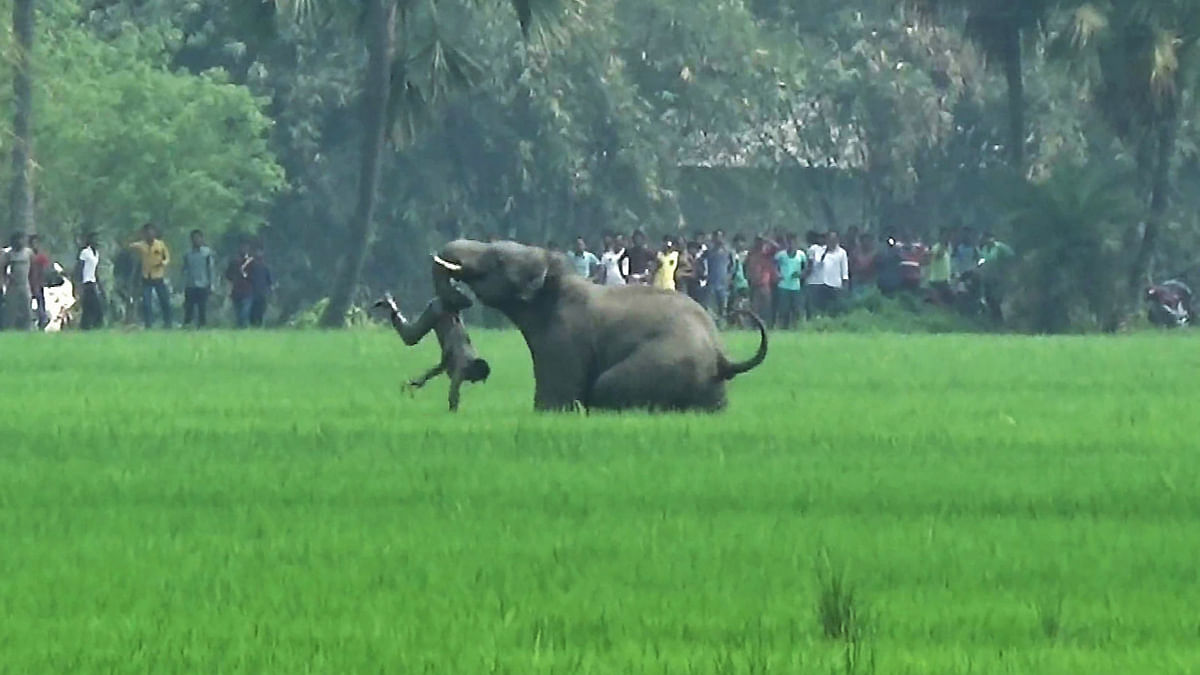
Human-animal conflict refers to the interactions and conflicts that arise between humans and wildlife when their interests and activities overlap. This conflict often occurs when human activities and development encroach upon natural habitats, leading to increased contact and competition for resources between humans and animals. The consequences of human-animal conflict can be detrimental to both parties and may include economic losses, damage to property, injury, and loss of life for both humans and animals.
Common scenarios of human-animal conflict include:
-
Crop Raiding: Wild animals may enter agricultural fields and damage crops, leading to economic losses for farmers.
-
Livestock Predation: Predatory animals may attack and kill domesticated animals, such as cattle, sheep, or poultry, causing financial losses for livestock farmers.
-
Urban Encroachment: As human populations expand and urban areas expand into natural habitats, animals may find themselves in close proximity to human settlements, leading to conflicts over space and resources.
-
Road Accidents: Animals crossing roads, especially in areas near forests or wildlife habitats, can lead to collisions with vehicles, resulting in injuries or fatalities for both humans and animals.
-
Attacks on Humans: In some cases, wild animals may perceive humans as a threat and may attack, leading to injuries or fatalities.
-
Conservation Challenges: Human-animal conflict can pose challenges for wildlife conservation efforts, as negative interactions with humans may lead to retaliation against wildlife, posing a threat to endangered species
Experts attribute the surge in incidents of human-wildlife conflict to various factors, including the expansion of cultivated areas around wildlife habitats, alterations in cropping patterns, a notable rise in the populations of animals like elephants and tigers resulting from conservation initiatives, and the movement of livestock and humans into wildlife habitats during unconventional hours. Additionally, there has been a significant upturn in the populations of prolific breeders such as wild boars and peacocks.
Notably, the increased frequency of conflicts involving elephants is primarily attributed to habitat depletion and fragmentation caused by human activities. Furthermore, the invasion of alien species has diminished the availability of food and water, while the cultivation of monoculture species like eucalyptus and acacia has adversely impacted plant biodiversity
4. Kerala State vs Human and Animal Conflict
- Approximately 30% of Kerala's land area is covered by forests. Given the relatively small size of the state, with an average width of approximately 70 km and a population exceeding 3.46 crore, numerous densely populated human settlements are situated in close proximity to protected forest regions.
- Additionally, many agricultural plantations are located near wildlife habitats, particularly in hilly areas, including the heavily forested eastern part of the state. While this geographical arrangement inevitably results in human-animal conflict, Kerala has experienced a notable surge in such incidents in recent years.
- Residents living near the fringes of forests have suffered substantial financial losses to their livelihoods, primarily due to frequent raids by elephants and wild boars. Since 2015, over 600 people in Kerala have lost their lives in conflicts with animals.
- This has triggered protests among affected villagers, some of which have escalated into open confrontations between protesters and officials from the State Forest department
- According to a study conducted by the State Forest department, Kerala experienced human-wildlife conflicts in 1,004 areas.
- The study documented more than 48,000 incidents of crop damage from 2013-14 to 2018-19. Among the 35 forest and wildlife divisions in the state, Nilambur north (94), Wayanad south (92), and Wayanad north (70) forest ranges reported the highest numbers of major conflict locations.
- The State recorded the highest number of incidents involving wild elephants, accounting for 14,611 occurrences between 2013-14 and 2018-19. Other contributors to these incidents include wild boars (5,518), bonnet macaques (4,405), and snakes (2,531).
- Elephants, bonnet macaques, and wild boars have caused significant damage to farmers living in forest fringe areas. Herbivores like sambar, spotted deer, and gaur have also played a considerable role in crop damage.
- The study reported a total of 814 livestock animals, including cattle, buffalo, and goats, being killed or injured in such attacks, with tigers preying on 420 of these animals
- Experts attribute the escalation in human-wildlife conflict incidents to several factors, including the expansion of cultivated areas surrounding wildlife habitats, alterations in cropping patterns, a notable rise in the populations of animals like elephants and tigers resulting from conservation efforts, and the movement of livestock and humans into wildlife habitats during unconventional hours.
- Additionally, there has been a significant upturn in the populations of prolific breeders such as wild boars and peacocks.
- However, the increased frequency of conflicts involving elephants can be traced to habitat depletion and fragmentation caused by human activities. Furthermore, the presence of invasive alien species has diminished the availability of food and water. The cultivation of monoculture species like eucalyptus and acacia has also had adverse effects on plant biodiversity
- Elephant-resistant trenches and solar-powered fences are commonly employed in Kerala and are generally deemed effective, provided they receive proper maintenance. However, there are several areas where these protective measures have not been implemented.
- Additionally, nearby residents often break these fences to allow their cattle to graze in the forests, and elephants themselves may damage the fences using their legs and tusks.
- In a master plan costing ₹620 crores to address this issue, the Forest department proposes the installation of elevated power fences that are beyond the reach of elephants.
- Furthermore, as part of the State government's new eco-restoration policy, the Forest department aims to plant suitable indigenous vegetation (wild mango, wild gooseberry, and wild jackfruit) in the forests to ensure food security for wild animals and discourage them from entering agricultural lands.
- Complementary measures include establishing early warning systems that utilize drones and human observers to track the movement of elephants and other dangerous animals, allowing people to avoid areas where they have been spotted. However, the widespread implementation of such warning mechanisms is lacking in Kerala.
- On the contrary, these measures are not effective against wild boars. Despite Kerala's request to declare wild boars as vermin still pending with the Centre, the State government has recently granted local bodies the authority to cull wild boars that pose threats to agricultural crops or human life.
- Other alternatives include capturing and neutering the boars or relocating them to forests where predators like tigers and leopards are present
Human-animal conflict is connected to the concept of Ecologically Sensitive Zones (ESZ) norms through the need to establish buffer areas around protected areas, wildlife habitats, and other ecologically sensitive zones. ESZ norms are guidelines and regulations aimed at minimizing human disturbances and activities that could negatively impact biodiversity and ecosystems in designated areas. These zones are established to create a buffer between human settlements and wildlife habitats, reducing the chances of conflict between humans and animals.
Here's how human-animal conflict is connected to ESZ norms:
-
Buffer Zones: ESZ norms often define buffer zones around national parks, wildlife sanctuaries, and other ecologically sensitive areas. These buffer zones act as a transitional space to mitigate the impacts of human activities on wildlife and vice versa.
-
Land Use Planning: ESZ norms include regulations related to land use planning around protected areas. By controlling and guiding developmental activities in these zones, there is an attempt to minimize disturbances to wildlife and their habitats, consequently reducing the likelihood of conflict.
-
Wildlife Corridors: ESZ norms may address the creation and preservation of wildlife corridors, which are crucial for the movement of animals between different habitats. Ensuring the connectivity of habitats helps in preventing isolated populations, which can lead to increased interactions and conflicts with humans.
-
Conservation Measures: ESZ norms may include measures to conserve and restore natural habitats. By maintaining the integrity of these habitats, the likelihood of wildlife straying into human-dominated landscapes in search of food or suitable habitat is reduced.
-
Community Engagement: Some ESZ norms encourage community engagement and participation in conservation efforts. Involving local communities in wildlife conservation can lead to better understanding and cooperation, reducing conflicts by promoting coexistence
|
Previous Year Questions
1.Consider the following statements in respect of Trade Related Analysis of Fauna and Flora in Commerce (TRAFFIC): (UPSC CSE 2017)
Which of the above statements is/are correct? (a) 1 only Answer: (b) 2.With reference to Indian elephants, consider the following statements: (UPSC CSE 2020) Which of the statements given above is/are correct? A.1 and 2 only B.2 and 4 only C.3 only D.1, 3 and 4 only Answer (A) 3.With reference to Indian laws about wildlife protection, consider the following statements: (UPSC CSE 2021) A.1 and 2 B.2 only C.1 and 3 D.3 only Answer (B) |
STRAIT OF HORMUZ
.png)
-
The Strait of Hormuz is a strategically significant and narrow maritime passage situated between Iran and Oman, serving as a link between the Persian Gulf, the Gulf of Oman, and the Arabian Sea. The U.S. Energy Information Administration (EIA) has labeled it as the world’s most vital oil transit chokepoint, through which nearly 20% of global liquid petroleum fuels and a substantial portion of LNG trade pass. In May, more than 45% of India’s crude oil imports were estimated to have transited through this strait. Given that India is the third-largest consumer of crude oil globally and imports over 85% of its oil needs, the strait plays a crucial role in its energy security.
-
Data from the commodity analytics firm Kpler indicates that, as of June, India has been importing over 2.2 million barrels per day (bpd) of crude oil from Russia, which constitutes more than 41% of its total oil imports.
-
While oil imports from the U.S. have shown a steady rise, supplies from West Asian nations such as Iraq, Saudi Arabia, the UAE, and Kuwait have remained relatively consistent. Many of these shipments were likely planned prior to the recent escalation in tensions between Israel and Iran, and therefore, may not reflect the impact of the current geopolitical developments.
-
Over the past two to three years, India has notably adjusted its oil import strategy. Russia has emerged as India’s top crude supplier, overtaking traditional exporters from West Asia. Importantly, Russian oil bypasses the Strait of Hormuz, as it is mainly transported via alternative sea routes like the Suez Canal and Red Sea, and sometimes through the Cape of Good Hope or Pacific Ocean routes.
-
India’s current oil procurement approach already demonstrates a diversified and risk-mitigated strategy, especially in light of uncertainties in West Asian oil routes, with Russian crude now making up the largest share of India’s import basket.
-
After recent U.S. air strikes targeting Iranian nuclear sites, Iran’s parliament passed a resolution on Sunday advocating the closure of the Strait of Hormuz, a vital corridor for global oil transportation. The final decision on this move now lies with Iran’s Supreme National Security Council.
-
Although Iran has repeatedly issued threats in the past to shut the strait, it has never acted on them. Even in the present context, industry analysts consider the likelihood of an actual blockade to be low. Nevertheless, the increased risk perception surrounding the potential closure is expected to trigger global alarm, including in India, by raising concerns over the security of oil and gas supplies and potentially driving up global energy prices.
- The Israel-Iran conflict poses a significant threat to global oil and gas flows due to the geopolitical sensitivity and strategic location of the region. At the heart of this issue lies the Strait of Hormuz—a narrow but crucial maritime passage through which nearly 20% of the world’s petroleum and a substantial share of liquefied natural gas (LNG) are transported.
- Iran borders this strait and has, over the years, repeatedly threatened to block it during periods of heightened tension, including in response to military actions or sanctions.
- When hostilities between Israel and Iran escalate—such as through air strikes, proxy conflicts, or cyber warfare—it increases the likelihood of retaliation from Iran that could involve disrupting maritime traffic in the Strait of Hormuz.
- Even if Iran does not fully close the strait, the mere threat or perception of such an action is enough to cause volatility in global energy markets. Tanker insurance rates rise, shipping routes are reconsidered, and countries heavily dependent on oil imports, like India, become increasingly vulnerable to supply disruptions and price shocks.
- Furthermore, any military conflict in this region risks damaging key infrastructure such as refineries, pipelines, or export terminals in the broader West Asian region.
- This would constrain oil production and distribution, affecting both the availability and price of crude oil and gas worldwide. Global markets respond quickly to these risks, often resulting in immediate spikes in prices due to concerns over supply security.
- In summary, the Israel-Iran conflict amplifies the risk to global oil and gas flows by potentially destabilizing a region that is central to global energy supply chains. It heightens fears of supply disruptions, increases market speculation, and threatens the economic stability of energy-importing countries, making it a matter of both geopolitical and economic concern
|
For Prelims: Strait of Hormuz, Persian Gulf, Energy Information Administration (EIA), liquefied natural gas (LNG)
For Mains: General Studies II: Effect of policies and politics of developed and developing countries on India’s interests.
|
|
Previous Year Questions
1.Which one of the following straits is nearest to the International Date Line? (UPSC CSE 2008) (a) Malacca Strait (b) Bering Strait (c) Strait of Florida (d) Strait of Gibraltar Answer (b) The International Date Line (IDL) roughly follows the 180° longitude, which lies in the Pacific Ocean, deviating slightly to accommodate international boundaries. The Bering Strait lies between Russia and Alaska, and it is very close to the 180° meridian, making it the closest strait to the International Date Line. Here's why the other options are incorrect:
|
GAGANYAAN
1. Context
ISRO conducts ‘integrated main parachute airdrop test’ for the Gaganyaan mission at Babina Field Firing Range in Jhansi, Uttar Pradesh. The test, held on November 3, was designed to verify the crew module’s stability in the event of a delay in the deployment of one of its main parachutes.
2. Gaganyaan Mission
- Gaganyaan, meaning "Sky Craft" in Sanskrit, is India's ambitious human spaceflight program aimed at sending Indian astronauts to space.
- It is a testament to India's growing prowess in the field of space exploration and a source of immense national pride.
- The program, spearheaded by the Indian Space Research Organisation (ISRO), envisions launching a crewed orbital spacecraft into low Earth orbit (LEO) for a period of up to seven days.
- The spacecraft will carry three astronauts, marking a historic first for India.
3. About The TV-D1 Mission
- The TV-D1 mission consists of two abort missions designed to test the safety mechanisms that will allow the Gaganyaan crew to escape the spacecraft during emergencies.
- In this mission, a rocket will ascend to an altitude of nearly 17 km before an abort signal triggers the separation of the crew module.
- The crew module will then descend using a parachute for a splashdown in the Bay of Bengal.
- The TV-D1 mission will have a total duration of 532 seconds, from liftoff at 8 a.m. to the crew module's splashdown about 10 km from the Sriharikota coast.
- The rocket used for this mission is ISRO's low-cost Test Vehicle, designed specifically for system testing.
- During the flight, the rocket will reach a peak relative velocity of 363 meters per second, approximately 1307 km per hour. It's important to note that the crew module will be empty for this test.
4. Key Objectives of the TV-D1 Mission
The TV-D1 mission serves two primary objectives.
- It aims to demonstrate the capabilities of the new Test Vehicle, hence its name Test Vehicle-Demonstration 1 (TV-D1).
- It will showcase a basic version of the crew module, testing the systems responsible for separating the crew module from the rocket during an abort mission and ensuring the safe escape of astronauts.
The TV-D1 mission simulates an abort condition during the ascent trajectory, corresponding to a Mach number of 1.2, as anticipated in the Gaganyaan mission.
5. The Low-Cost Test Vehicle
- Unlike the upcoming full-fledged test flight of the crew module into space and back, which will use the human-rated LVM3 rocket in 2024, the TV-D1 mission employs a low-cost basic rocket.
- This Test Vehicle utilizes existing liquid propulsion technology but introduces innovations such as the throttleable and restartable L110 Vikas engine, capable of controlling propellant use.
- ISRO developed this cost-effective solution as each GSLV Mk III launch, which was previously used for such missions, costs between Rs 300-400 crore.
6. Safety and Crew Escape System
- Safety remains a top priority for ISRO in the Gaganyaan project, especially in light of international incidents involving space missions.
- The TV-D1 mission aims to test the systems ensuring the crew module's safety, such as environmental control, life support systems, and an integrated vehicle health management system.
- This system can detect anomalies that may jeopardize astronauts' safety and initiate mission abort procedures.
7. Preparations and Timeline for Gaganyaan
- ISRO has set a target timeframe for the Gaganyaan mission in 2024, with flexibility based on the development stages and ensuring the mission's safety.
- The schedule includes an unmanned mission at the beginning of the next year, abort missions this year, and discussions of the manned mission for late 2024 or early 2025.
- ISRO has completed the human rating of the LVM 3 rocket and performed static tests for human-rated solid rocket boosters.
8. Conclusion
The TV-D1 mission represents a significant milestone in the Gaganyaan program, as it integrates a near-complete system for a flight test. The success of this mission paved the way for further qualification tests and unmanned missions, ultimately leading to the first Gaganyaan mission with Indian astronauts. ISRO's dedication to safety and rigorous testing is paramount as India advances its space exploration endeavours.
|
For Prelims: Gaganyaan programme, TV-D1 mission, Low Earth Orbit, Isro, LVM3, GSLV Mk III,
For Mains:
1. Discuss the key objectives of the TV-D1 mission within the Gaganyaan program. How does this mission contribute to astronaut safety and the overall success of Gaganyaan? (250 Words)
|
|
Previous Year Questions
1. With reference to India's satellite launch vehicles, consider the following statements: (UPSC 2018)
1. PSLVs launch satellites useful for Earth resources monitoring whereas GSLVs are designed mainly to launch communication satellites.
2. Satellites launched by PSLV appear to remain permanently fixed in the same position in the sky, as viewed from a particular location on Earth.
3. GSLV Mk III is a four-stage launch vehicle with the first and third stages using solid rocket motors; and the second and fourth stages using liquid rocket engines.
Which of the statements given above is/are correct?
A. 1 only
B. 2 and 3
C. 1 and 2
D. 3 only
Answer: A
2. India's first human space mission "Gaganyaan" will be launched in which year? (ESIC UDC 2022)
A. 2022 B. 2023 C. 2024 D. 2025 E. 2026
Answer: B
3. Find the incorrect statements, about the Gaganyaan Mission of India. (MPSC 2020)
1. Four pilots from Indian Air Force were shortlisted to be astronauts of Gaganyaan.
2. They will be trained at Yuri Gagarin Cosmonaut Centre in Russia.
3. This mission was announced by Prime Minister in 2014.
4. It is scheduled for 2022 with a team of 5 crew members and a month-long stay in space.
A. 1, 2, 3, 4 B. 2, 3, 4 C. 3, 4 D. 2, 3
Answer: C
4. ISRO is related to: (SSC JE EE 2020)
A. space research B. agricultural research C. seed research D. marine research Answer: A
5. Which of the following pairs is/are correctly matched? (UPSC 2014) Spacecraft Purpose
Select the correct answer using the code given below: (a) 1 only (b) 2 and 3 only (c) 1 and 3 only (d) 1, 2 and 3 Answer: B 6. Consider the following statements: (UPSC 2016) The Mangalyaan launched by ISRO 1. is also called the Mars Orbiter Mission
2. made India the second country to have a spacecraft orbit the Mars after USA
3. made India the only country to be successful in making its spacecraft orbit the Mars in its very first attempt
Which of the statements given above is/are correct? (a) 1 only (b) 2 and 3 only (c) 1 and 3 only (d) 1, 2 and 3 Answer: C |
Source: The Indian Express


