
GOVERNOR VS STATES
- The Indian Constitution outlines the framework for appointing a Governor. According to Article 153, each state must have a Governor. Article 155 provides that the Governor is appointed by the President through an official warrant bearing the President's signature and seal.
- As per Article 156, although the Governor typically serves a five-year term, they remain in office at the discretion of the President.
- This means that the President can ask the Governor to resign before the term ends. However, since the President acts based on the counsel of the Prime Minister and the Union Cabinet, it is effectively the central government that controls both the appointment and removal of a Governor.
- Articles 157 and 158 describe the eligibility criteria and terms for holding the office. The Governor must be an Indian citizen and at least 35 years old.
- Additionally, the individual must not be a sitting member of either Parliament or any state legislature, and cannot hold any position that offers financial gain
- The Constitution mandates that the Governor must generally act in accordance with the advice provided by the state's Council of Ministers. Article 163 clarifies this by stating that a Council of Ministers, led by the Chief Minister, shall assist and guide the Governor in carrying out his duties—except in cases where the Constitution allows the Governor to act independently at his discretion.
- Furthermore, the Governor holds constitutional authority to summon, prorogue, or dissolve the State Legislative Assembly. However, these powers are to be exercised only after consulting the Council of Ministers.
- In his role as the ceremonial head of the state, the Governor also holds several important responsibilities, such as appointing the Chief Minister, members of the Council of Ministers, the Advocate General, the State Election Commissioner, heads of state universities, and members and the Chairman of the State Public Service Commission, among others
|
Infographics
 |
The Constitution grants the Governor certain legislative powers, including the authority to approve or reject a Bill passed by both Houses of the State Legislature. Article 200 outlines the choices available to the Governor:
-
Approve the Bill,
-
Withhold approval,
-
Send it back to the Legislature for reconsideration (provided it is not a Money Bill), or
-
Forward the Bill to the President for a decision.
While the proviso to Article 200 mentions that the Governor should return the Bill "as soon as possible," it does not define a specific time frame, which has occasionally led to significant delays.
To address such delays, the Supreme Court recently issued clear, time-bound directions for Governors regarding action on Bills:
-
Assent must be given within one month,
-
The Governor cannot withhold assent against the advice of the Council of Ministers,
-
If returning the Bill, it must be done within three months,
-
If the Governor chooses to reserve the Bill for the President, this must also be done within three months, and
-
Should the Legislature pass the Bill again after reconsideration, the Governor is required to grant assent within one month.
The powers, responsibilities, and overall role of the Governor have frequently come under review, drawing attention from both central government-appointed committees and the Supreme Court of India.
Starting with the Administrative Reforms Commission in 1969 and extending to the Punchhi Commission in 2007, numerous expert bodies set up over the years have proposed comprehensive reforms concerning various aspects of the Governor's office, including the method of appointment, scope of authority, duration of tenure, procedure for removal, and other related issues
The Sarkaria Commission, in its 1988 report on Centre-State relations, proposed reforms concerning the Governor's role, especially in the context of Articles 200 and 201 of the Constitution.
The National Commission to Review the Working of the Constitution (2001), chaired by M.N. Venkatachaliah and initiated during Prime Minister Atal Bihari Vajpayee’s tenure, noted that Governors often function as representatives of the Central Government, leading to perceptions of bias and political controversy in their decisions.
In 2007, the Punchhi Commission re-evaluated the Centre-State dynamic and recommended that a Governor should be appointed only after consulting the Chief Minister of the respective state. It also emphasized the importance of prompt action by the Governor on legislative bills.
Over time, the impartiality of the Governor’s office has been questioned, prompting judicial intervention. The Supreme Court has, through a series of landmark judgments, clarified the scope and limitations of the Governor’s powers:
-
Shamsher Singh vs State of Punjab (1974): The court ruled that the Governor must act based on the advice of the Council of Ministers.
-
Raghukul Tilak vs State of Haryana (1979): The judgment emphasized that Governors are not subordinate to the Centre, but occupy a vital constitutional role within the state.
-
S.R. Bommai vs Union of India (1994): A milestone ruling, it held that the Governor’s recommendation for imposing President’s Rule under Article 356 must be backed by a floor test, and such decisions are open to judicial review.
-
Rameshwar Prasad vs Union of India (2006): Addressing the dissolution of the Bihar Assembly, the Supreme Court stated that the Governor’s personal opinion cannot justify invoking President’s Rule in a state.
|
For Prelims: Governor, Center-state relations, Article 200 For Mains:
1. In the context of recent disputes, examine the relationship between Governors appointed by the Centre and state governments led by opposition parties. How can this relationship be strengthened to ensure smooth functioning of the federal structure? (250 Words)
2. Explain the roles of the Governor and the President in the legislative process as outlined in the Constitution of India, focusing on their powers related to assenting to Bills passed by state legislatures. (250 Words)
3. Discuss Ethical Considerations and Constitutional Provisions Regarding Governor Running for Elections. (250 Words)
|
|
Previous Year Questions
1. With reference to the Legislative Assembly of a State in India, consider the following statements: ( UPSC 2019)
1. The Governor makes a customary address to Members of the House at the commencement of the first session of the year.
2. When a State Legislature does not have a rule on a particular matter, it follows the Lok Sabha rule on that matter.
Which of the statements given above is/are correct? A. 1 only B. 2 only C. Both 1 and 2 D. Neither 1 nor 2
2. Consider the following statements: ( UPSC 2018) 1. No criminal proceedings shall be instituted against the Governor of a State in any court during his term of office.
2. The emoluments and allowances of the Governor of a State shall not be diminished during his term of office.
Which of the statements given above is/are correct? A. 1 only B. 2 only C. Both 1 and 2 D. Neither 1 nor 2 3.Which of the following are the discretionary powers given to the Governor of a State? (2014)
1. Sending a report to the President of India for imposing the President’s rule
Appointing the Ministers
2. Reserving certain bills passed by the State Legislature for consideration of the President of India
3. Making the rules to conduct the business of the State Government
Select the correct answer using the code given below. A. 1 and 2 only B. 1 and 3 only C. 2, 3 and 4 only D. 1, 2, 3 and 4
4. Which one of the following suggested that the Governor should be an eminent person from outside the State and should be a detached figure without intense political links or should not have taken part in politics in the recent past? (UPSC CSE 2019)
A.First Administrative Reforms Commission (1966)
B.Rajamannar Committee (1969)
C.Sarkaria Commission (1983)
D.National Commission to Review the Working of the Constitution (2000)
Answers: 1-C, 2-C, 3-B, 4-C
|
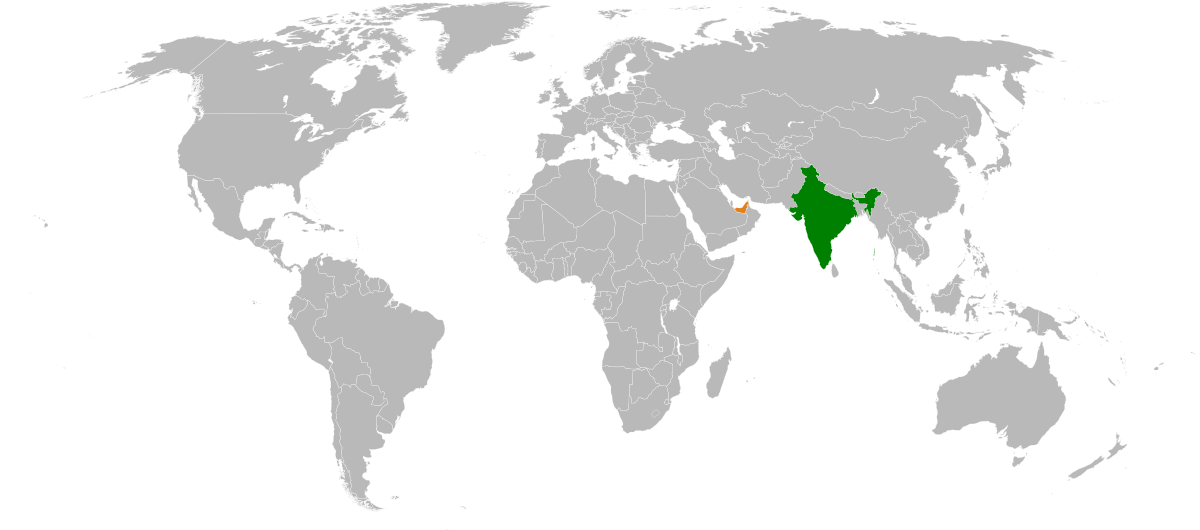
INDIA-UAE
-
Economic Relations: The UAE is India's third-largest trading partner and one of the major investors in India. Bilateral trade between the two countries has been growing steadily, with a focus on sectors like energy, information technology, pharmaceuticals, textiles, and agriculture. The UAE is also a significant source of remittances for India due to the large Indian diaspora residing in the UAE.
-
Investment: The UAE has made substantial investments in India across sectors such as infrastructure, real estate, hospitality, logistics, and renewable energy. The Abu Dhabi Investment Authority (ADIA) and the Dubai-based DP World are prominent examples of UAE investments in India.
-
Energy Cooperation: The UAE is a crucial source of energy for India. The Abu Dhabi National Oil Company (ADNOC) supplies crude oil to Indian refineries, and both countries have explored opportunities for collaboration in the energy sector, including renewable energy projects.
-
Defense and Security: India and the UAE have enhanced cooperation in defense and security matters. They conduct joint military exercises, exchange intelligence, and cooperate in countering terrorism and maritime security. The UAE has also supported India's efforts to combat terrorism and extradite wanted individuals.
-
Strategic Partnership: In 2015, India and the UAE elevated their bilateral relationship to a "Comprehensive Strategic Partnership." This designation reflects the deepening ties and shared interests between the two countries.
-
Cultural Exchanges and People-to-People Contacts: There is a significant Indian community in the UAE, comprising professionals, skilled workers, and businesspeople. Both countries have encouraged cultural exchanges, tourism, and educational cooperation to strengthen people-to-people contacts and promote mutual understanding.
-
Diplomatic Engagements: High-level visits between India and the UAE have been frequent, reflecting the importance both countries attach to the relationship. The leaders of both countries have engaged in regular dialogues to enhance bilateral cooperation and address common challenges.
The United Arab Emirates (UAE) holds significant importance to India for several reasons:
-
Economic Relations: The UAE is one of India's major trading partners and a significant source of investment. Bilateral trade between the two countries has been growing steadily, with the UAE being India's third-largest trading partner. The UAE's investments in India span various sectors, including infrastructure, real estate, hospitality, logistics, and renewable energy. This economic partnership contributes to India's economic growth and development.
-
Energy Security: The UAE is an important source of energy for India. It supplies crude oil to Indian refineries, helping to meet India's energy needs. Ensuring a stable and reliable energy supply is crucial for India's growing economy, and the UAE plays a significant role in fulfilling India's energy requirements.
-
Indian Diaspora: The UAE is home to a large Indian diaspora, comprising professionals, skilled workers, and businesspeople. The Indian community in the UAE plays a vital role in strengthening people-to-people ties and contributing to the UAE's economy through their work and remittances. The UAE's favorable policies towards the Indian community and its contributions have fostered a sense of goodwill and mutual understanding between the two countries.
-
Defense and Security Cooperation: India and the UAE have been strengthening their defense and security cooperation in recent years. They conduct joint military exercises, share intelligence, and collaborate in countering terrorism and ensuring maritime security. The UAE's support to India's counter-terrorism efforts and extradition of wanted individuals have been crucial in addressing shared security concerns.
-
Strategic Location: The UAE's geographic location at the crossroads of Asia, Europe, and Africa makes it an important hub for trade, connectivity, and investment. Its modern infrastructure, world-class ports, and air connectivity make it an attractive destination for Indian businesses looking to expand their reach globally. The UAE's strategic location serves as a gateway for India's trade with the Middle East, North Africa, and beyond.
-
Cultural Exchanges and Tourism: The UAE and India have fostered cultural exchanges and tourism, facilitating people-to-people contacts and enhancing mutual understanding. Millions of Indians visit the UAE for business, tourism, and religious purposes, strengthening the cultural and social ties between the two countries.
-
Diplomatic Engagements: India and the UAE maintain regular high-level engagements, with frequent visits by leaders and officials from both sides. These interactions help in deepening bilateral relations, addressing common challenges, and exploring new avenues of cooperation..
|
For Prelims: India-UAE, Global food security, G20, I2U2, Public Distribution System, POSHAN Abhiyaan, Covid, Conflict and Climate, Comprehensive Economic Partnership Agreement,
For Mains:
1. Discuss India's role in ensuring global food security during the pandemic and post-pandemic times. (250 Words)
|
|
Previous Year Questions
1. With reference to the international trade of India at present, which of the following statements is/are correct? (UPSC 2020)
1. India's merchandise exports are less than its merchandise imports.
2. India's imports of iron and steel, chemicals, fertilizers, and machinery have decreased in recent years.
3. India's exports of services are more than its imports of services.
4. India suffers from an overall trade/current deficit.
Select the correct answer using the code given below:
A. 1 and 2 only B. 2 and 4 only C. 3 only D. 1, 3 and 4 only
Answer: D
2. Consider the following countries: (UPSC 2018)
Which of the above are among the ‘free-trade partners’ of ASEAN? (a) 1, 2, 4 and 5 (b) 3, 4, 5 and 6 (c) 1, 3, 4 and 5 (d) 2, 3, 4 and 6 Answer: C 3. The term ‘Regional Comprehensive Economic Partnership’ often appears in the news in the context of the affairs of a group of countries known as (UPSC 2016) (a) G20 (b) ASEAN (c) SCO (d) SAARC Answer: B 4. The area known as ‘Golan Heights’ sometimes appears in the news in the context of the events related to ( UPSC 2015) (a) Central Asia (b) Middle East (c) South-East Asia (d) Central Africa Answer: B 5. Which of the following are the objectives of ‘National Nutrition Mission’? (UPSC 2017)
Select the correct answer using the code given below: (a) 1 and 2 only (b) 1, 2 and 3 only (c) 1, 2 and 4 only (d) 3 and 4 only Answer: A |
CENTRAL CONSUMER PROTECTION AUTHORITY(CCPA)
- This Act provides for the establishment of the CCPA to promote, protect, and enforce consumer rights. The CCPA has the authority to investigate, recall unsafe goods, order discontinuation of unfair trade practices, and impose penalties for misleading advertisements affecting consumers
- The Act enumerates the rights of consumers, including the right to be informed, right to choose, right to be heard, right to seek redressal, and the right to consumer education
- It prohibits unfair trade practices such as false advertising, misleading information, deceptive packaging, and selling goods/services that pose a danger to consumers' lives and safety
- The Act introduces the concept of product liability, holding manufacturers, sellers, and service providers accountable for any harm caused by defective products or deficient services
- The Act establishes Consumer Disputes Redressal Commissions at the district, state, and national levels to expedite the resolution of consumer disputes. These commissions provide simple, speedy, and cost-effective dispute resolution mechanisms
- It includes provisions specifically addressing consumer rights and liabilities related to e-commerce transactions and direct selling, ensuring adequate protection for consumers engaged in online purchases and transactions
- The Act emphasizes the importance of consumer awareness and education through outreach programs, campaigns, and educational initiatives to empower consumers with knowledge about their rights and responsibilities
- The penalties for misleading advertisements, unfair trade practices, and violations of consumer rights have been increased, along with provisions for compensating consumers for any loss or injury suffered due to a defective product or deficient service
Here's a breakdown of the SCPC's key functions:
Composition:
- Each SCPC is headed by the Minister-in-charge of Consumer Affairs in the state government.
- It includes other official and non-official members representing various interests, such as:
- Members of the state Legislative Assembly
- Representatives from consumer organizations
- Representatives from farmers, manufacturers, traders, and industrialists
- Experts in consumer affairs and law
Responsibilities:
- The SCPC organizes awareness campaigns to educate consumers about their rights and responsibilities. It also disseminates information about consumer laws and redressal mechanisms.
- The SCPC receives and investigates consumer complaints against unfair trade practices, defective goods and services, and misleading advertisements. It can recommend action against businesses violating consumer rights.
- The SCPC advises the state government on matters related to consumer protection. This includes proposing new laws, policies, and initiatives to strengthen consumer rights within the state.
- The SCPC monitors the market for unfair trade practices and emerging consumer issues. It may conduct research and studies to identify and address emerging consumer concerns.
- The SCPC coordinates with the Central Consumer Protection Authority (CCPA) and other consumer protection agencies to ensure effective enforcement of consumer rights across the country
The Central Consumer Protection Authority (CCPA) is a quasi-judicial regulatory body established under the Consumer Protection Act, 2019, in India. It plays a pivotal role in promoting, protecting, and enforcing consumer rights at the national level.
Functions:
The CCPA is empowered with a wide range of functions to safeguard consumer interests, including:
- It can investigate unfair trade practices, misleading advertisements, and violations of consumer rights. Additionally, it has the authority to prosecute entities found guilty of such offenses.
- The CCPA can order the recall of unsafe or defective products from the market. It can also direct businesses to issue refunds or replacements for defective products or services.
- The CCPA can impose significant penalties on businesses found indulging in unfair trade practices, misleading advertisements, or violating consumer rights.
- It can file class-action suits on behalf of groups of consumers affected by the same unfair practice.
- The CCPA can issue guidelines and standards for product safety and service quality.
- It can undertake initiatives to raise awareness about consumer rights and educate consumers about redressal mechanisms.
- The CCPA collaborates with State Consumer Protection Councils (SCPCs) to ensure effective consumer protection across the country.
Structure:
The CCPA is headed by a Chief Commissioner and three other Commissioners, all appointed by the Central Government. It also has a team of supporting staff that assists in carrying out its various functions.
|
For Prelims: Current events of national and international importance
For Mains: General Studies II: Government policies and interventions for development in various sectors and issues arising out of their design and implementation
|
|
Previous Year Questions
1. Which of the following statements about the 'Consumer Protection Act 2019' is not true? (UGC NET 2020)
A.It has widened the definition of consumer
B.It provides for E-filing of complaints
C.It establishes Central Consumer Protection Authority
D.It ignores mediation as an alternate disputes resolution mechanism
Answer (D)
|
CONSUMER PRICE INDEX (CPI)
1. Context
2. Consumer Price Index
- The Consumer Price Index (CPI) is a measure of the change in prices of a basket of goods and services that are commonly purchased by consumers. It is the most commonly used measure of inflation.
- The CPI is calculated by comparing the prices of the goods and services in the basket in a particular period to those of the same in a base period.
- The base period is usually the previous year's corresponding period. The difference in prices is expressed as a percentage, and this is the CPI inflation rate.
- The CPI is calculated for eight different categories of goods and services Food and beverages, Housing, Clothing and footwear, Transport, Health, Education, Communication, Recreation and Miscellaneous goods and services.
- The weights of each category in the CPI are determined by the expenditure patterns of urban households. For example, food and beverages have the highest weight in the CPI, followed by housing and transport.
- The CPI inflation rate is an important indicator of the cost of living.
- It is used by the government to set monetary policy and by businesses to make pricing decisions.
3. Wholesale Price Index
- The Wholesale Price Index (WPI) is a measure of the change in prices of goods and services at the wholesale level.
- It is calculated by comparing the prices of a basket of goods and services in a particular period to those of the same in a base period.
- The base period is usually the previous year's corresponding period. The difference in prices is expressed as a percentage, and this is the WPI inflation rate.
- The WPI is calculated for 67 groups of commodities, which are further divided into 225 subgroups.
- The weights of each group and subgroup in the WPI are determined by the value of the goods and services produced in each group and subgroup.
- The WPI inflation rate is an important indicator of inflation at the wholesale level.
- It is used by businesses to make pricing decisions and by the government to set monetary policy.
4. Findings of the Report
4.1. Food inflation
- Food inflation in India remained high in August, at 9.94%. This was driven by rising prices of essential food items, such as cereals, pulses, vegetables, and oils.
- Eleven of the 12 items on the heavyweight food and beverages group of the CPI logged price increases, with oils and fats, the sole item logging a year-on-year decline in prices, posting its first sequential increase in nine months.
- Vegetables provided some relief, with tomatoes leading an appreciable month-on-month deflation of 5.88% in the 19-member basket.
- However, the cooking staples of potatoes and onions were among the seven items that continued to log sequential inflation (2.3% and 12.3%, respectively).
4.2. Monsoon deficit and rising crude oil prices
- The near-term inflation outlook is also made more uncertain by other factors, including a distinct deficit in monsoon rainfall.
- Besides the overall 10% shortfall, sharp regional and temporal anomalies in rain distribution have impacted either the sowing or the quality of produce of several farm items.
- Kharif's sowing of pulses had, as of September 8, recorded an 8.6% shortfall compared with the year-earlier period.
- Another inflation driver, crude oil, has also seen a steady rise in prices as the output cuts by major oil producers of the OPEC+ grouping start to bite.
- The price of India's crude basket had, as of September 12, climbed 7.2% from the average in August to $92.65/barrel, according to official data.
4.3. RBI measures to control inflation
- For the RBI, the latest inflation data further roils its interest rate calculus.
- Unless CPI inflation decelerates by an incredible 250 basis points in September to a 4.33% pace, price gains are certain to substantially overshoot the monetary authority's 6.2% forecast for the July-September quarter, leaving it with few real options to achieve its medium-term price stability goal of 4% inflation.
- As the RBI has been at pains to stress, failure to anchor inflation expectations risks hurting growth.
5. About the sticky Consumer Price Index (CPI)
- The sticky Consumer Price Index (CPI) is a subset of the CPI that includes goods and services that change prices relatively infrequently.
- These goods and services are thought to incorporate expectations about future inflation to a greater degree than prices that change more frequently.
- Some of the items included in the sticky CPI are Rent, Housing costs, Utilities, Education, Healthcare, Transportation, Household furnishings and appliances, Personal insurance, Recreation, and Miscellaneous goods and services.
- The sticky CPI is often used by economists to measure inflation expectations.
- This is because prices of sticky goods and services are less likely to be affected by short-term changes in supply and demand, and are therefore more likely to reflect changes in inflation expectations.
- The sticky CPI is also used by central banks to set monetary policy.
- This is because the central bank wants to make sure that inflation expectations are anchored at a low level.
- If inflation expectations start to rise, the central bank may raise interest rates to bring them back down.
6. How India’s retail inflation is measured?
- India's retail inflation is measured by the Consumer Price Index (CPI), a basket of goods and services commonly purchased by urban households.
- The CPI is calculated by the National Statistical Office (NSO) every month.
- The CPI is calculated by comparing the prices of the goods and services in the basket in a particular month to those of the same in a base month.
- The base month is usually the previous year's corresponding month. The difference in prices is expressed as a percentage, and this is the CPI inflation rate.
- The CPI is calculated for eight different categories of goods and services, Food and beverages, Housing, Clothing and footwear, Transport, Health, Education, Communication, Recreation and Miscellaneous goods and services.
- The weights of each category in the CPI are determined by the expenditure patterns of urban households. For example, food and beverages have the highest weight in the CPI, followed by housing and transport.
- The CPI inflation rate is an important indicator of the cost of living in India.
- It is used by the government to set monetary policy and by businesses to make pricing decisions.
7. Calculation of Inflation
- Inflation is the rate at which the prices of goods and services increase over time.
- It is calculated by comparing the prices of a basket of goods and services in a particular period to the prices of the same basket of goods and services in a base period.
- The base period is usually the previous year's corresponding period. The difference in prices is expressed as a percentage, and this is the inflation rate.
There are two main ways to calculate inflation
The CPI is calculated by the following formula:
CPI = (Cost of a basket of goods and services in current period / Cost of a basket of goods and services in base period) * 100
The PPI is calculated by the following formula:
PPI = (Cost of a basket of goods and services at the wholesale level in the current period / Cost of a basket of goods and services at the wholesale level in the base period) * 100
|
For Prelims: Consumer Price Index, Wholesale Price Index, Inflation, retail inflation, Producer Pirce Index, National Statistical Office, OPEC+, Crude oil, Kharif season, Monsoon,
For Mains:
1. Analyse the factors contributing to high food inflation in India in recent months. Discuss the impact of high food inflation on the Indian economy and suggest measures to mitigate it. (250 words)
2. Explain the concept of sticky inflation. What are the various factors that contribute to sticky inflation? Discuss the implications of sticky inflation for the Indian economy. (250 words)
|
|
Previous Year Questions
1. With reference to inflation in India, which of the following statements is correct? (UPSC 2015)
A. Controlling the inflation in India is the responsibility of the Government of India only
B. The Reserve Bank of India has no role in controlling the inflation
C. Decreased money circulation helps in controlling the inflation
D. Increased money circulation helps in controlling the inflation
Answer: C
2. With reference to India, consider the following statements: (UPSC 2010)
1. The Wholesale Price Index (WPI) in India is available on a monthly basis only.
2. As compared to Consumer Price Index for Industrial Workers (CPI(IW)), the WPI gives less weight to food articles.
Which of the statements given above is/are correct?
A. 1 only B. 2 only C. Both 1 and 2 D. Neither 1 nor 2
Answer: C
3. Consider the following statements: (UPSC 2020)
1. The weightage of food in Consumer Price Index (CPI) is higher than that in Wholesale Price Index (WPI).
2. The WPI does not capture changes in the prices of services, which CPI does.
3. Reserve Bank of India has now adopted WPI as its key measure of inflation and to decide on changing the key policy rates.
Which of the statements given above is/are correct?
A. 1 and 2 only B. 2 only C. 3 only D. 1, 2 and 3
4. India has experienced persistent and high food inflation in the recent past. What could be the reasons? (UPSC 2011)
1. Due to a gradual switchover to the cultivation of commercial crops, the area under the cultivation of food grains has steadily decreased in the last five years by about 30.
2. As a consequence of increasing incomes, the consumption patterns of the people have undergone a significant change.
3. The food supply chain has structural constraints.
Which of the statements given above are correct?
A. 1 and 2 only B. 2 and 3 only C. 1 and 3 only D. 1, 2 and 3
Answer: B
5. The Public Distribution System, which evolved as a system of management of food and distribution of food grains, was relaunched as _______ Public Distribution System in 1997. (SSC JE EE 2021)
A. Evolved B. Transformed C. Tested D. Targeted
Answer: D
6. Under the Antyodaya Anna Yojana, up to what quantity of rice and wheat can be purchased at a subsidised cost? (FCI AG III 2023)
A. 35 kg B. 40 kg C. 30 kg D. 25 kg E. 50 kg
Answer: A
7. As per the the National Statistical Office (NSO) report released on 7 January 2022, India's Gross domestic product (GDP) is expected to grow at ___________ per cent (in first advance estimates) in the fiscal year 2021-22? (ESIC UDC 2022)
A. 17.6 per cent B. 9.5 per cent C. 11 per cent D. 9.2 per cent E. None of the above
Answer: D
8. The main emphasis of OPEC (Organisation of the Petroleum Exporting Countries) is on which of the following? (UKPSC 2016)
A. The production of petroleum
B. Control over prices of petroleum
C. Both (a) and (b)
D. None of the above
Answer: C
9. In the context of global oil prices, "Brent crude oil" is frequently referred to in the news. What does this term imply? (UPSC 2011)
1. It is a major classification of crude oil.
2. It is sourced from the North Sea.
3. It does not contain sulfur.
Which of the statements given above is/are correct?
A. 2 only B. 1 and 2 only C. 1 and 3 only D. 1, 2 and 3
Answer: B
10. The term 'West Texas Intermediate', sometimes found in news, refers to a grade of (UPSC 2020)
A. Crude oil B. Bullion C. Rare earth elements D. Uranium
Answer: C
11. With reference to the cultivation of Kharif crops in India in the last five years, consider the following statements: (UPSC 2019)
1. Area under rice cultivation is the highest.
2. Area under the cultivation of jowar is more than that of oilseeds.
3. Area of cotton cultivation is more than that of sugarcane.
4. Area under sugarcane cultivation has steadily decreased.
Which of the statements given above are correct?
A. 1 and 3 only B. 2, 3 and 4 only C. 2 and 4 only D. 1, 2, 3 and 4
Answer: A
|
GRADED RESPONSE ACTION PLAN(GRAP)
1.Context
2.What is a Graded Response Action Plan (GRAP)
3.Has GRAP Helped?
- The biggest success of GRAP has been in fixing accountability and deadlines.
- For each action to be taken under a particular air quality category, executing agencies are marked.
- In a territory like Delhi, where a multiplicity of authorities has been a long-standing impediment to effective governance, this step made a crucial difference.
4.Measures that are taken in other states
- one criticism of the EPCA, as well as GRAP, has been the focus on Delhi. While other states have managed to delay several measures, citing a lack of resources, Delhi has always been the first to have stringent measures enforced.
- When the air quality shifts from poor to very poor, the measures listed under both sections have to be followed since the plan is incremental in naturality reaches the severe+ stage, GRAP talks about shutting down schools and implementing the odd-even road-space rationing scheme.
5.Actions under GRAP
Severe+ or Emergency |
(PM 2.5 OVER 300 300 µg/cubic metre or PM10 over 500µg/cu. m. for 48+ hours)
|
Severe |
(PM 2.5 OVER 250µg/cu. m. or PM10 over 430 µg/cu. m. )
|
Very Poor |
(PM2.5 121-250 µg/cu. m. or PM10 351-430 µg/cu.m. )
|
Moderate to Poor |
(PM2.5 61-120 µg/cu. m. or PM10 101-350 µg/cu. m.)
|
- The AQI is a colour-coded index launched under the Swachh Bharat campaign to simplify the understanding of pollution levels.
- It helps convey the condition of the air and guides appropriate measures based on the severity of pollution.
- The AQI consists of six categories, each with a corresponding colour code: 'Good' (0-50), 'Satisfactory' (51-100), 'Moderately Polluted' (101-200), 'Poor' (201-300), 'Very Poor' (301-400) and 'Severe' (401-500).

7. Commission for Air Quality Management (CAQM)
- The Commission for Air Quality Management (CAQM) was established by the Government of India in October 2020 to address the persistent and severe problem of air pollution in the National Capital Region (NCR) and adjoining states.
- It was later given statutory backing through the Commission for Air Quality Management in National Capital Region and Adjoining Areas Act, 2021. The Commission functions under the Ministry of Environment, Forest and Climate Change (MoEFCC).
- The CAQM was created in response to the recurring air pollution crisis in Delhi and surrounding areas, which often see hazardous air quality levels, especially during the winter months.
- The problem is aggravated by factors such as stubble burning in Punjab and Haryana, industrial and vehicular emissions, and construction dust. Earlier, multiple agencies such as the Central Pollution Control Board (CPCB), state pollution control boards, and environment departments operated independently, leading to poor coordination and weak enforcement. The CAQM was envisioned as a centralized, permanent body to unify and coordinate efforts across states.
- The Commission’s jurisdiction extends to Delhi, Punjab, Haryana, Rajasthan, and Uttar Pradesh, covering areas adjoining the NCR. It is headed by a Chairperson appointed by the Central Government—typically a former Secretary to the Government of India or a Chief Secretary of a state.
- The body includes representatives from central ministries, state governments, the CPCB, ISRO, and NITI Aayog, along with experts in environmental science and pollution control.
- The CAQM is responsible for monitoring, coordinating, and implementing air quality management plans across its jurisdiction. It formulates policies to prevent and control air pollution, enforces existing environmental laws, and ensures that central, state, and local authorities act in a coordinated manner.
- The Commission also plays a critical role in tackling stubble burning, a major seasonal contributor to pollution in northern India. It has the authority to issue directions to central, state, and local authorities, and its orders override those of other agencies within its jurisdiction. Moreover, the Commission possesses powers of a civil court, enabling it to summon individuals, demand documents, and take punitive actions against violators.
- The establishment of CAQM marks an important step in India’s environmental governance. By creating a single authority with comprehensive powers, the government sought to move away from fragmented approaches and ensure consistent, region-wide enforcement.
- However, despite its potential, the Commission faces challenges such as jurisdictional overlaps, limited manpower, and the lack of strong enforcement mechanisms at the local level. Successful functioning of CAQM ultimately depends on the cooperation of states, technological monitoring, and public awareness
For Prelims and Mains
|
For Prelims: Graded Response Action Plan, National Capital Region (NCR),Environmental pollution(prevention control)Authority (EPCA).
For Mains:
1. What is GRAP? What is the Delhi-NCR action plan as air pollution increases? (250 words).
|
|
Previous Year Questions
1.In the cities of our country, which among the following atmospheric gases are normally considered in calculating the value of the Air Quality Index? (2016)
Select the correct answer using the code given below: (a) 1, 2 and 3 only (b) 2, 3 and 4 only (c) 1, 4 and 5 only (d) 1, 2, 3, 4 and 5 Answer (b) |
ARBITRATION COUNCIL OF INDIA(ACI)
- The Arbitration Council of India (ACI) is a statutory body created to strengthen and professionalize the system of arbitration in India, making the country a more reliable and attractive destination for resolving commercial and legal disputes outside traditional courts.
- It was established under the Arbitration and Conciliation (Amendment) Act, 2019, which amended the original Arbitration and Conciliation Act, 1996.
- In simple terms, the main purpose of the ACI is to improve the quality, credibility, and efficiency of arbitration in India.
- Arbitration is a method where disputes—especially in business and contractual matters—are settled by neutral experts called arbitrators instead of through lengthy court trials.
- By creating a national-level authority, the government aimed to bring uniform standards and oversight to how arbitration is practiced across the country.
- One of the key roles of the ACI is to grade and accredit arbitration institutions. This means it evaluates arbitral institutions based on criteria such as infrastructure, quality of arbitrators, case management practices, and transparency.
- Institutions that meet the required standards are officially recognized, which helps parties choose reliable forums for resolving their disputes. Over time, this process is meant to raise overall confidence in India’s arbitration ecosystem.
- The ACI also plays a role in maintaining a database of qualified arbitrators. This helps ensure that parties have access to trained and experienced professionals, reducing concerns about bias, lack of expertise, or procedural irregularities.
- By promoting training and setting professional benchmarks, the Council contributes to building a pool of high-quality arbitration practitioners in the country
- The 2019 legislative changes put forward the creation of the Arbitration Council of India as a central regulatory authority responsible for encouraging, modernising, and strengthening arbitration practices across the country.
- This framework was shaped by the suggestions of the High-Level Committee on Arbitration, led by Justice B.N. Srikrishna, which presented its findings in July 2017.
- Under these amendments, the Council was given broad responsibilities, such as evaluating and ranking arbitral institutions, recognising professional organisations that certify arbitrators, and maintaining a national record of arbitration awards issued in India.
- The proposal also stated that the ACI would be led by a Chairperson appointed by the Central Government in consultation with the Chief Justice of India.
- This position could be held by a former Supreme Court judge, a former Chief Justice or judge of a High Court, or a distinguished expert in arbitration, along with ex officio members from the executive branch forming part of the Council
- One of the principal criticisms directed at the Council is its perceived lack of institutional independence.
- A majority of its members are either selected or appointed by the Union government, which has led to worries about the autonomy of the arbitration system in India—especially since the government itself is the largest party to legal disputes.
- Legal experts have pointed out that placing regulatory authority in a body dominated by government nominees, with powers to rate arbitration centres, certify arbitrators, and shape policy, raises serious concerns about neutrality and has little parallel in countries known for arbitration-friendly frameworks.
- Additional issues have been raised regarding the ACI’s responsibility for approving and assessing arbitral institutions.
- Although this approach is said to be influenced by models in Singapore and Hong Kong, there is an important difference. In those jurisdictions, arbitration is largely managed by a single, central institution rather than a regulator supervising numerous bodies.
- The 2019 amendments allow the ACI to recognise an unlimited number of arbitration institutions, which could weaken quality control, create heavy administrative burdens for the Council, and increase costs for public resources
- Under the Arbitration and Conciliation Act, 1996, Indian courts have the authority to issue interim protections to safeguard the interests of parties involved in arbitration.
- Currently, such relief can be sought before the arbitration begins, while proceedings are ongoing, or even after an arbitral award is issued but prior to its enforcement in India.
- The draft Bill aims to redefine this role by restricting the courts’ power to grant interim measures only to two stages: before the start of arbitration or after the award has been delivered.
- It proposes a change to Section 9(2), which at present mandates that arbitration must be initiated within 90 days from the date a court grants pre-arbitration interim relief.
- Under the new proposal, this 90-day countdown would instead start from the date the application for interim relief is submitted, rather than when the court passes the order. The purpose behind this shift is to reduce delays caused by extended court involvement before arbitration formally begins.
- Another key recommendation is the addition of a new Section 9-A, which would permit parties to approach an emergency arbitrator for interim protection after arbitration has started but before the arbitral tribunal is formally constituted
- On October 18, 2024, the Union government issued the draft Arbitration and Conciliation (Amendment) Bill, 2024 and opened it up for public feedback. The proposed legislation aims to revitalise institutional arbitration by introducing a range of structural changes.
- It offers a new definition of an “arbitral institution,” describing it as any body or organisation that administers arbitration proceedings under its own procedural framework or as agreed upon by the parties.
- This represents a shift away from the 2019 framework, which required such institutions to be formally notified or designated by the Supreme Court or a High Court.
- The draft also seeks to broaden the responsibilities of arbitral institutions by granting them certain powers that are currently exercised solely by the courts.
- These include the ability to extend the deadline for issuing arbitral awards, lower arbitrators’ fees in cases where delays are caused by the tribunal, and replace arbitrators when necessary.
- If implemented, these steps are expected to limit the extent of judicial involvement in arbitration proceedings.
- However, in March 2025, while responding to a query in Parliament, Union Law Minister Arjun Ram Meghwal stated that the Bill was still being examined
|
For Prelims: Arbitration, Alternate Dispute Resolution, International Arbitration Centre, Foreign Direct Investment, Startup India For Mains: Alternate Dispute Resolution, Impact of Arbitration on Efficiency of Function of Judiciary, Promoting Dispute Resolution in India. |


